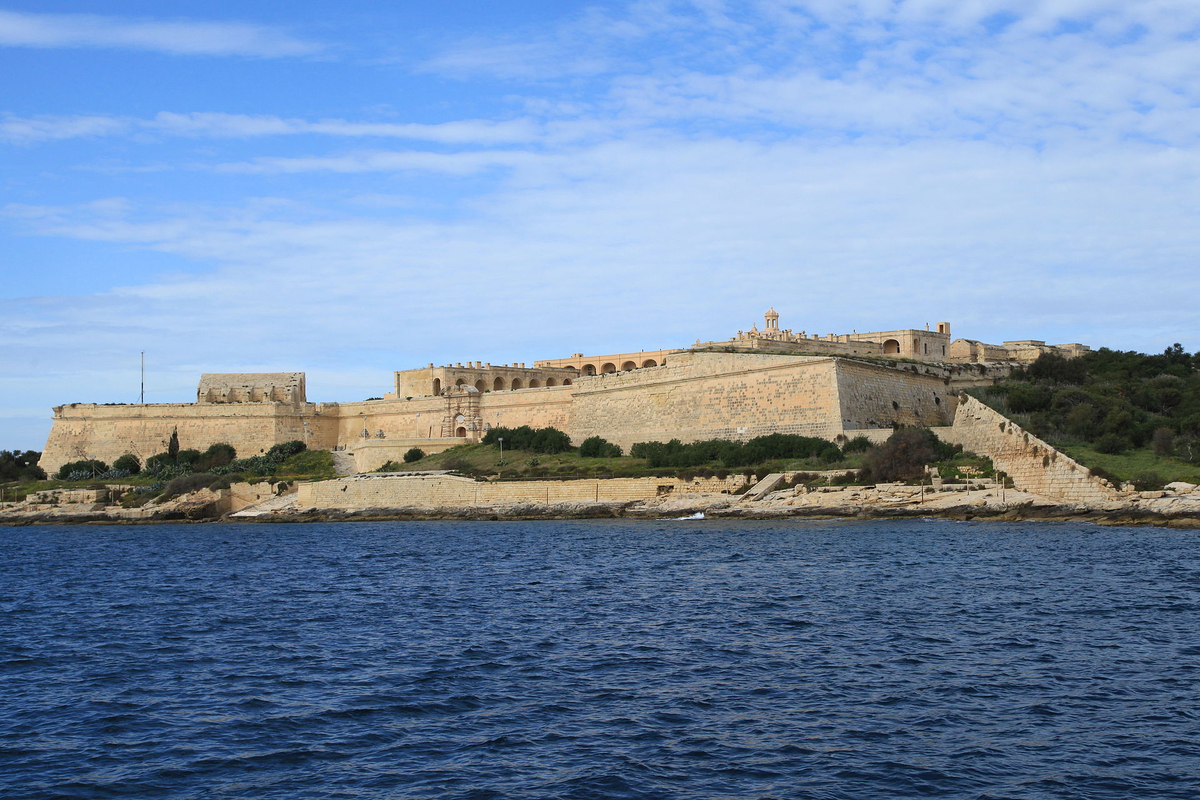
Construction of Fort Manoel completed in 1755.
Malta
Military Architecture
5 min read
Updated By: History Editorial Network (HEN)
Published:
The construction of Fort Manoel on Malta started on 14-Sep-1723, marking a pivotal development in the island's defense strategy. Funded by Portuguese Grand Master António Manoel de Vilhena of the Order of Saint John, the project aimed to bolster the island's fortifications against potential threats, particularly from the Ottoman Empire. Prior to this, Malta's defenses were considered inadequate against evolving military technologies.
The location selected for Fort Manoel was Manoel Island, situated strategically within Marsamxett Harbour. The fort's design, attributed to French military engineer René Jacob de Tigné and his Maltese counterpart, Charles François de Mondion, followed the principles of the star fort, a type recognized for its ability to withstand artillery assaults. The layout included angular bastions to minimize blind spots and maximize defensive firepower, alongside a deep moat and a series of underground tunnels for secure movement and supplies.
Upon completion, Fort Manoel significantly enhanced Malta’s military capabilities. It served not only as a defensive stronghold but also housed a chapel dedicated to Saint Anthony of Padua, showcasing the integration of religious and military functions typical of Knight’s establishments. Over time, Fort Manoel played critical roles during various military conflicts, including the French invasion of Malta and the subsequent British colonization.
The fort had a lasting impact on the local population and regional geopolitics. It provided employment opportunities during its construction and thereafter served as a stable base for the garrison, contributing to the local economy. The strategic advantage it created helped to secure Malta's harbors, essential for controlling seaborne trade routes in the Mediterranean.
Fort Manoel remains a testament to early 18th-century military architecture and engineering, reflecting the broader historical context of European and Ottoman tensions in the Mediterranean. Today, it stands as an iconic historical and tourist site, attracting visitors interested in Malta's rich heritage and the enduring legacy of the Knights of St. John.
#MoofLife #FortManoel #MaltaHistory #MilitaryArchitecture #OrderOfSaintJohn #MediterraneanHistory
Primary Reference
Manoel Island – TONY BLOOD | PHOTOGRAPHY

Explore the Life Moments of
 AI Twin