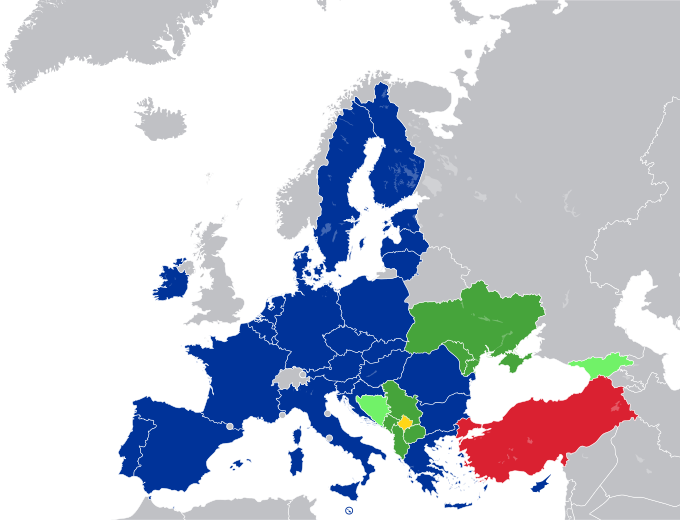
European Union Membership of Malta
Malta

Political
Economic Growth
5 min read
Updated By: History Editorial Network (HEN)
Published:
Following years of negotiations and preparations, Malta officially became a member of the European Union. This event was the culmination of rigorous political and economic reforms that positioned the small island nation as a full participant in the EU's political framework and economic structures.
Malta's EU membership signified a critical shift for its previously insular economy. Being part of the EU meant that the nation had to adopt the EU acquis communautaire, involving adjustments to various sectors including the legal system, trade policies, and environmental standards. Malta's accession to the EU also required comprehensive changes in regulations related to business, judiciary reforms, and social policies to align with EU norms.
Economically, Malta benefited almost immediately from access to the EU Single Market, enabling smoother and more extensive trade activities with fellow EU member states. This integration allowed local businesses to operate under uniform trade policies, reducing barriers and fostering opportunities for growth. Financially, Malta saw an influx of structural and cohesion funds aimed at infrastructure development, promoting regional equality, and enhancing the quality of life for its residents.
Social impact was equally significant: EU membership provided Maltese citizens the freedom to travel, live, and work in other EU countries with fewer restrictions, enhancing personal and professional mobility. This mobility contributed to the exchange of skills, knowledge, and culture between Malta and the broader EU community, enriching the island nation's diverse culture even further.
The accession also brought challenges, requiring Malta to relinquish some degree of sovereignty to comply with common EU policies and regulations. This transition was met with both political and public scrutiny, reflecting concerns about national identity and the implications of shared governance.
In summary, Malta's entry into the European Union was a transformative period that brought economic opportunities, social mobility, and challenges of integration. It showcased a commitment to new standards and regulations whilst offering a bridge between its local attributes and the broader European framework.
#EUIntegration #Malta #EconomicGrowth #Mobility #MoofLife
Primary Reference
ICL > Malta > Index

Explore the Life Moments of
 AI Twin