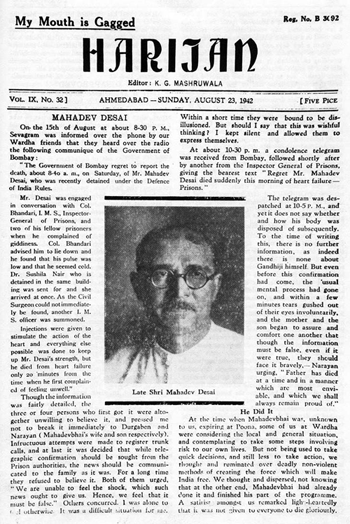
Mahadev Desai's Transfer to Yeravda
India
Political
6 min read
Updated By: History Editorial Network (HEN)
Published:
On 10 March 1932, a significant event unfolded in the Indian independence struggle when Mahadev Desai, a close aide and personal secretary to Mahatma Gandhi, was transferred to Yeravda Central Jail. Desai, an important figure in the Indian National Movement, had been involved in the civil disobedience campaign led by Gandhi. The campaign sought to resist British rule through non-violent means, primarily focusing on the refusal to pay taxes and boycotting British goods and services.
Prior to his transfer, Desai had been incarcerated alongside Gandhi and other key nationalist leaders. Their imprisonment was part of the British colonial response to suppress the growing movement and prevent further mobilization of the Indian population. Yeravda Jail, located near Pune, was a high-security facility where many prominent freedom fighters were detained during this period. The jail had previously housed both Gandhi and other leaders during prior civil disobedience campaigns.
The transfer of Desai to this facility was a strategic move by the British authorities aimed at isolating him from Gandhi and other national leaders. This measure was expected to disrupt communication and coordination within the Indian National Congress and undermine their efforts. However, the British underestimated the resilience and commitment of India's freedom fighters.
Desai's detention at Yeravda did not hinder his contributions to the movement. Even in jail, Desai continued to write extensively, documenting the struggles and strategies of the Indian National Movement. His works provided invaluable insights for the continued campaign against colonial rule. Additionally, the imprisonment of key leaders like Desai galvanized public support and drew international attention to India's struggle for independence.
Yeravda Central Jail itself became a symbol of the British government's attempts to stifle resistance while simultaneously highlighting the resolve of the Indian leaders and the broader population. Desai's transfer underscored the lengths to which the British authorities would go to deter the movement and the sacrifices made by leaders committed to the cause.
Despite their efforts, the British could not quell the spirit of the movement. Desai’s continued advocacy and writings strengthened the resolve of the resisters, ensuring that the struggle for independence persisted with vigor.
#MahadevDesai #IndianIndependence #CivilDisobedience #YervadaJail #Gandhi #ColonialIndia #MoofLife
Primary Reference
Gandhi Timeline - Life Chronology of Mahatma Gandhi
Explore the Life Moments of
 AI Twin