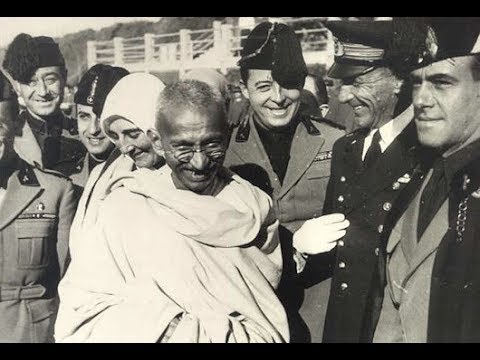
Encounter with Mussolini in Vatican City
India
Political
5 min read
Updated By: History Editorial Network (HEN)
Published:
In the 20th century, Mahatma Gandhi, the iconic leader of India's non-violent independence movement, embarked on a notable journey to Europe. During his visit, Gandhi, known for his strong advocacy for peace, social justice, and self-reliance, had the significant opportunity to meet with key political figures. One of the high-profile encounters was with Italian dictator Benito Mussolini in Rome.
This meeting was characterized by two sharply contrasting philosophies. On one hand, Gandhi's ideology centered on non-violence, civil disobedience, and the upliftment of the oppressed, while Mussolini, the head of the National Fascist Party, upheld authoritarian rule, nationalistic fervor, and militarism. Despite these deep ideological differences, Gandhi and Mussolini's meeting was marked by a level of mutual curiosity and discussion.
The encounter drew considerable attention globally, highlighting the stark ideological divide between the two leaders. Gandhi's presence in Rome came at a time when Italy was under Mussolini's fascist grip, which had abolished democratic structures and emphasized centralized autocratic control. On a global scale, this meeting exemplified the juxtaposition of two leading figures of their time, whose leadership styles and political beliefs were fundamentally opposed.
Following the meeting, Gandhi continued his tour in Europe, also visiting the Vatican. His time in Vatican City reflected his deep respect for various religious traditions and his desire to seek interfaith dialogue and understanding. By engaging with the Pope, Gandhi aimed to highlight the importance of religious harmony and respect among different faiths.
The impacts of Gandhi's interactions during this period were manifold. They underscored his global influence in promoting non-violence and social reform. Moreover, the discussions with Mussolini and the visit to the Vatican underscored Gandhi's commitment to dialogue across ideological and religious divides, further solidifying his role as a global peace proponent.
In essence, Gandhi's meeting with Mussolini and his visit to the Vatican represented key moments in his international advocacy for peace and justice, contributing to his enduring legacy in the struggle for human rights.
#GandhiInEurope #NonViolence #PoliticalDivergence #Mussolini #VaticanVisit #PeaceAdvocacy #GlobalLeadership #MoofLife
Primary Reference
Gandhi Timeline - Life Chronology of Mahatma Gandhi
Explore the Life Moments of
 AI Twin