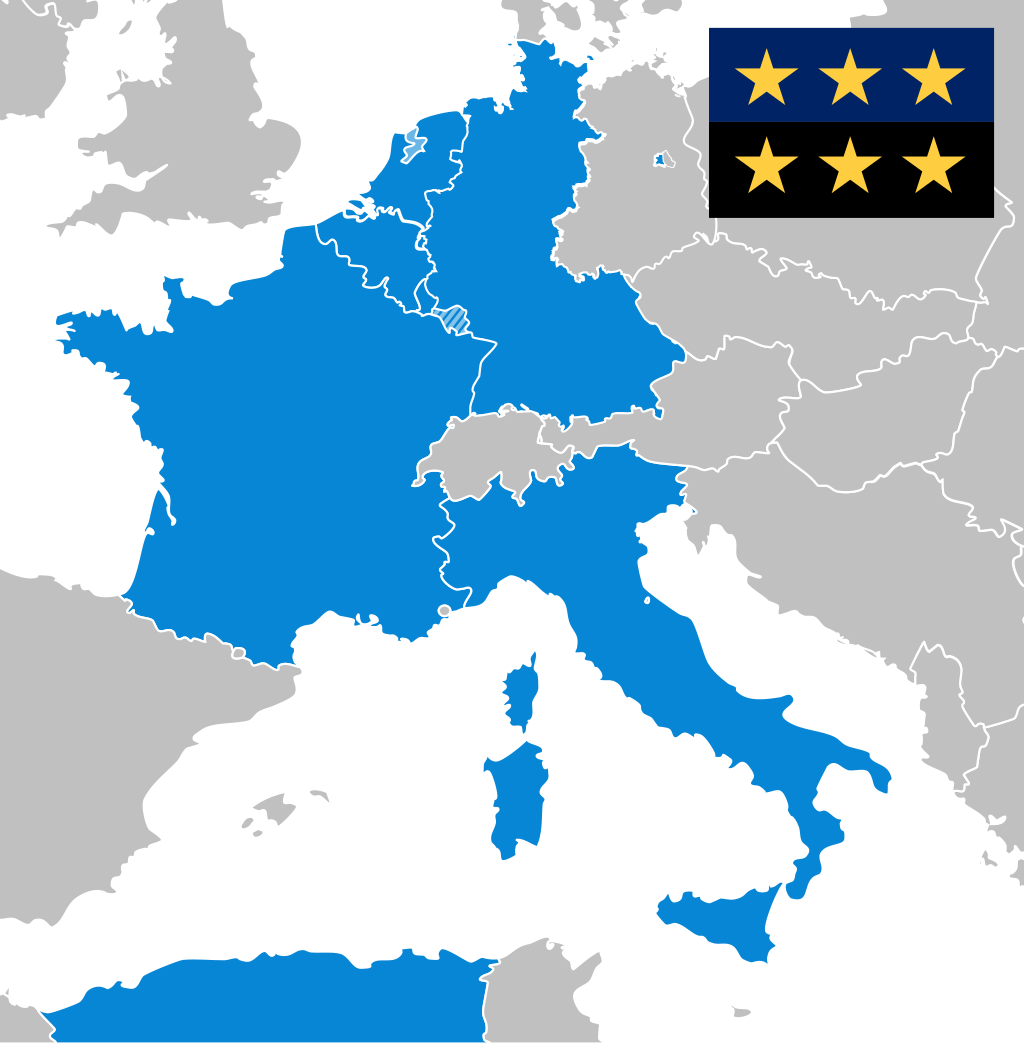
Formation of the European Coal and Steel Community in 1951
Luxembourg
EuropeanIntegration
PostWarReconstruction
5 min read
Updated By: History Editorial Network (HEN)
Published:
In the post-World War II era, Western Europe was focused on reconstruction and preventing future conflicts. This led to the establishment of the European Coal and Steel Community (ECSC). The ECSC was formed with the signing of the Treaty of Paris by six European nations, including Belgium, France, Italy, the Netherlands, West Germany, and Luxembourg. The agreement aimed at integrating the coal and steel industries of member states, ensuring that no single nation could mobilize these industries for war purposes independently.
The formation of the ECSC marked the first step towards European integration, promoting peace and economic cooperation among its members. By pooling coal and steel resources, the ECSC sought to create a common market which would stimulate economic growth and boost employment. It provided a framework for free trade in coal and steel, removing tariffs and trade barriers, thus fostering unprecedented economic collaboration.
Luxembourg played a notable role in the ECSC not only as a founding member but also as the host of its Secretariat. The choice of Luxembourg underlined the importance of smaller nations in the European integration process and underscored the cooperative spirit of the initiative. Luxembourg, already industrially advanced, benefited significantly from the common market, improving its own economic standing while contributing to regional stability.
The ECSC's establishment also led to creating institutions such as the High Authority, a precursor to the European Commission, which coordinated policies among the member states. This institutional framework laid the foundation for future European bodies governing economic and political cooperation.
In terms of impact, the ECSC succeeded in stabilizing the coal and steel sectors, leading to significant increases in production and cross-border investment. By mid-decade, the ECSC countries saw notable growth in coal production, reducing reliance on imports from non-member states, and aiding in their collective post-war recovery. The ECSC is widely recognized as a precursor to the European Union, planting the seeds of today's economic and political union across Europe.
#EuropeanIntegration #EconomicCooperation #PostWarReconstruction #LuxembourgRole #ECSC #MoofLife
Primary Reference
History of the European Union – 1945-59 | European Union

Explore the Life Moments of
 AI Twin