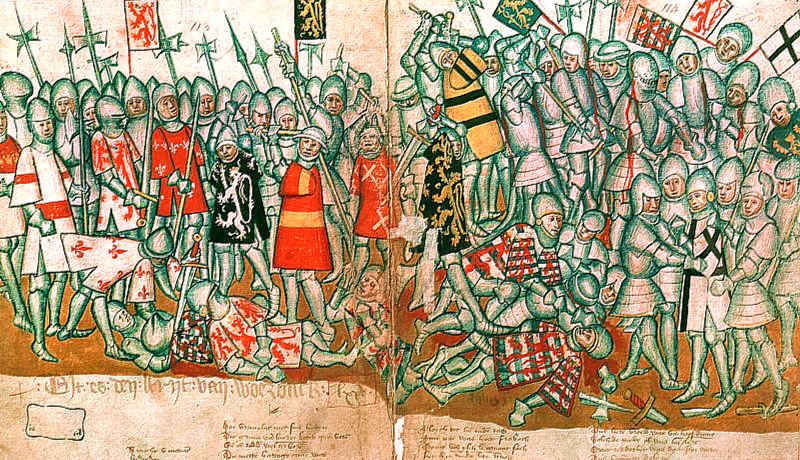
Annexation of Limburg by John I from Battle of Worringen
Luxembourg
Political
4 min read
Updated By: History Editorial Network (HEN)
Published:
In the medieval period, the Battle of Worringen took place as a significant conflict, pivotal in shaping the political landscape of the region. John I, Count of Luxembourg, faced Henry VI, Count of Luxembourg. This battle was driven by disputes over the Duchy of Limburg, crucial for controlling trade routes and regional influence.
The Duchy of Limburg came under contention due to its strategic importance. The death of the ruling Duke left no direct heirs, causing different factions to lay claim. Henry VI aimed to solidify his dominion, while John I sought to expand his influence. The conflict escalated, involving not just the primary contenders but also alliances among other nobles and cities.
John I of Luxembourg led his forces, supported by allies including the Archbishop of Cologne and various regional nobles. Henry VI commanded the opposing side, strengthened by his alliances and military prowess. The ensuing battle saw thousands of knights and infantry clash on the plains near Worringen.
The confrontation lasted several hours, characterized by heavy fighting and strategic maneuvers. John I's forces ultimately managed to overrun Henry VI's troops. The death toll was substantial, with numerous knights and soldiers perishing. The victory allowed John I to annex the Duchy of Limburg, extending his control and reshaping the power dynamics in the region.
The annexation of Limburg had considerable impacts. It bolstered John I's position and increased Luxembourg's political and economic influence. The control over the duchy enabled better regulation of trade routes, enhancing economic prosperity for Luxembourg. The shift in power also affected neighboring regions, altering alliances and prompting adjustments in regional strategies.
#MoofLife #BattleOfWorringen #JohnI #DuchyOfLimburg #LuxembourgHistory
Primary Reference
Grand Duchy of Luxembourg

Explore the Life Moments of
 AI Twin