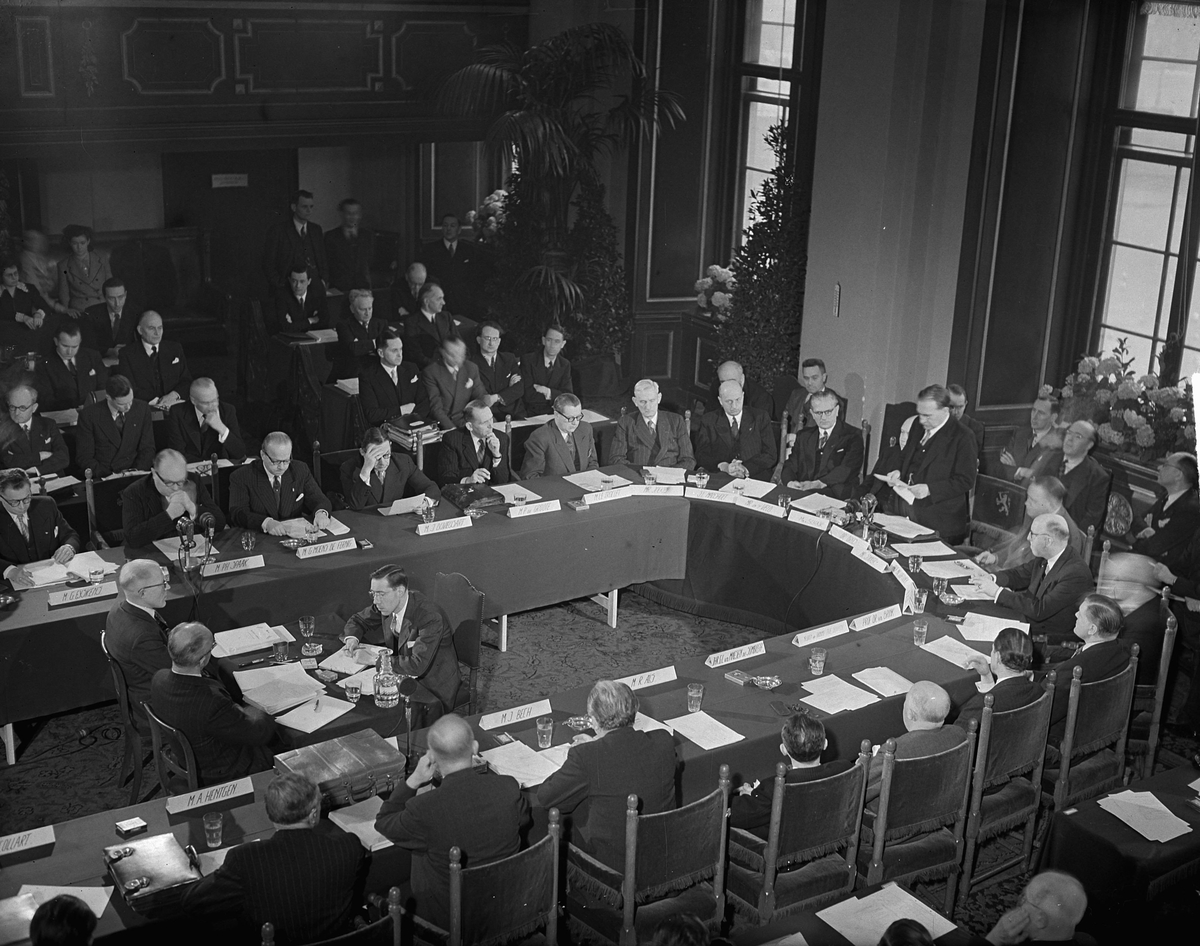
Signing of the Benelux Customs Union between Belgium, the Netherlands, and Luxembourg
Luxembourg
Economic
Political
5 min read
Updated By: History Editorial Network (HEN)
Published:
In the crucial period of World War II, Belgium, the Netherlands, and Luxembourg decided to take an impactful economic step by forming the Benelux Customs Union. The agreement marked a significant commitment to regional cooperation and economic integration at a time when Europe was beginning to envisage a future beyond the immediate turmoil.
The historical backdrop to this formation was the collective occupation and hardships faced by these three nations during the war. From the shared experiences of conflict and disruption, a mutual consensus emerged on the need for a closer economic bond to accelerate post-war recovery. The envisioned customs union aimed to abolish customs barriers and establish a singular economic block that would facilitate the free movement of goods, capital, and services.
The signing, which took place in London, where many governments-in-exile were based, signified the intent to create an economic partnership geared towards rebuilding their economies and enhancing collective resilience. This was among the first conscious steps towards European unity, predating other regional integrations like the European Coal and Steel Community, which eventually led to the formation of the European Union.
The agreement had profound economic implications. The combined population of the three countries formed a significant market, and the customs union facilitated efficient trade, which contributed to the rapid post-war economic recovery of the member states. The cooperative move was also indicative of the broader geopolitical shift towards regional alliances and collective strategies as mechanisms for stability and growth.
The establishment of the Benelux Customs Union laid essential groundwork. It demonstrated the viability and benefits of regional cooperation, influencing subsequent economic and political integrations within Europe. The union not only enhanced trade through the elimination of tariffs but also served as a model and impetus for broader European cooperation, eventually contributing substantially to the groundwork for what would become the European Common Market and later the European Union.
#BeneluxCustomsUnion #EconomicIntegration #PostWarEurope #RegionalCooperation #Luxembourg #MoofLife
Primary Reference
Benelux - Historical events in the European integration process ...

Explore the Life Moments of
 AI Twin