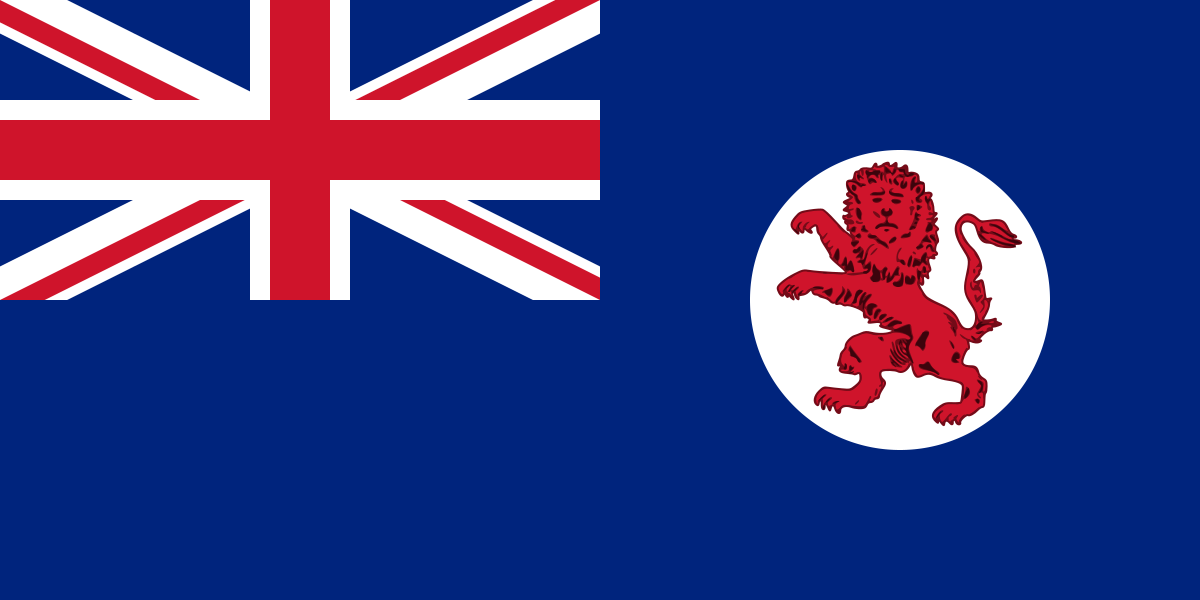
Establishment of East African Protectorate by British Colonial Government

Colonialism
5 min read
Updated By: History Editorial Network (HEN)
Published:
In the late 19th century, the British government established the East African Protectorate, encompassing modern-day Kenya. This move aimed to expand British influence in the region, secure trade routes, and counter the growing presence of other European powers. The protectorate was strategically valuable due to its coastal access to the Indian Ocean and its potential for agricultural development.
The creation of the East African Protectorate had a significant impact on the indigenous communities of Kenya. British colonial rule led to the displacement of many local tribes and the imposition of new systems of governance and land ownership. The British aimed to exploit the natural resources of the region, particularly the fertile lands suitable for cash crop cultivation like coffee and tea. This economic exploitation further marginalized the indigenous populations and disrupted their traditional way of life.
The British government implemented policies that favored European settlers, leading to the establishment of large-scale commercial farms owned by British colonizers. This further marginalized the local communities, who were often forced to work as laborers on these farms for minimal wages.
Despite resistance from local communities, the British colonial administration maintained control over the East African Protectorate through a combination of military force, administrative structures, and alliances with selected indigenous leaders. The imposition of British colonial rule brought about a period of significant social, cultural, and economic change in Kenya, laying the groundwork for the country's future development and its struggles for independence.
The legacy of the creation of the East African Protectorate continues to be felt in Kenya today, shaping the country's political landscape, land tenure systems, and economic disparities. The impact of colonialism is still evident in issues of land ownership, ethnic tensions, and social inequalities. #Colonialism #BritishEmpire #KenyanHistory #ImpactOfColonialism
Explore the Life Moments of
 AI Twin