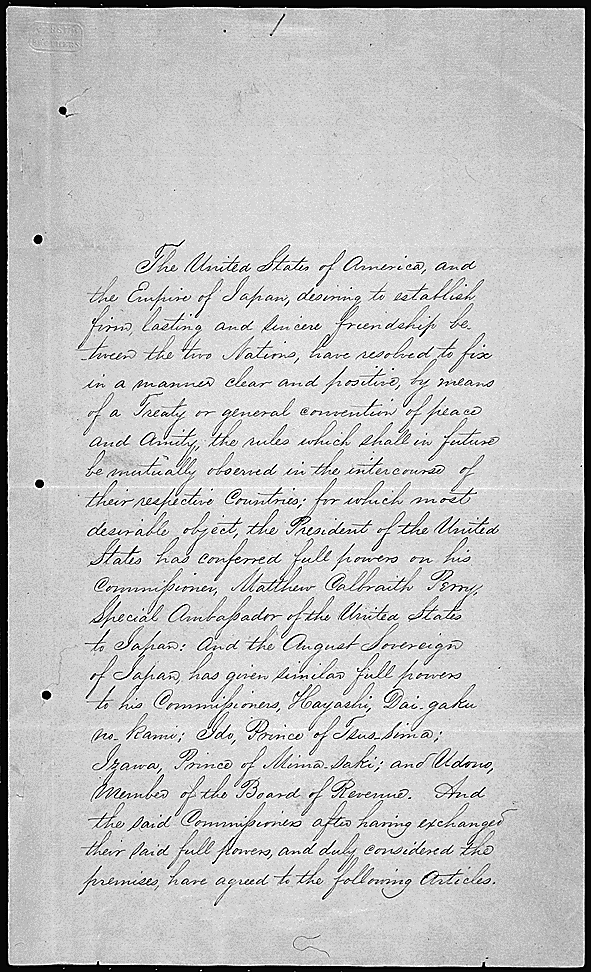
Treaty: Convention of Kanagawa Signed
Japan
Political
Global Trade
4 min read
Updated By: History Editorial Network (HEN)
Published:
In the mid-19th century, Japan had remained isolated from the Western world for over two centuries under the Sakoku policy. However, pressure from Western powers, particularly the United States, led to the signing of the Convention of Kanagawa. The treaty was negotiated by Commodore Matthew Perry of the United States Navy, who arrived in Japan with a fleet of warships.
The Convention of Kanagawa aimed to establish trade relations between the United States and Japan. It granted American ships the right to refuel and resupply at two Japanese ports, Shimoda and Hakodate. This agreement marked the end of Japan's seclusion and opened the doors for further Western influence in the country.
The signing of the treaty had a significant impact on Japan's political and economic landscape. It forced Japan to abandon its isolationist policies and engage with the international community. The Convention of Kanagawa paved the way for similar agreements with other Western powers, ultimately leading to the modernization and Westernization of Japan during the Meiji Restoration.
The treaty also exposed Japan to new technologies, ideas, and industries, sparking a period of rapid industrialization and modernization. The influx of Western goods and knowledge had a profound impact on Japanese society, transforming it into a global economic and political player.
The Convention of Kanagawa remains a crucial moment in Japanese history, symbolizing the country's transition from isolation to international engagement. It laid the foundation for Japan's emergence as a modern industrialized nation and set the stage for its eventual rise as a major global power.
#ConventionofKanagawa #USJapanRelations #MeijiRestoration #Modernization #Westernization.
Explore the Life Moments of
 AI Twin