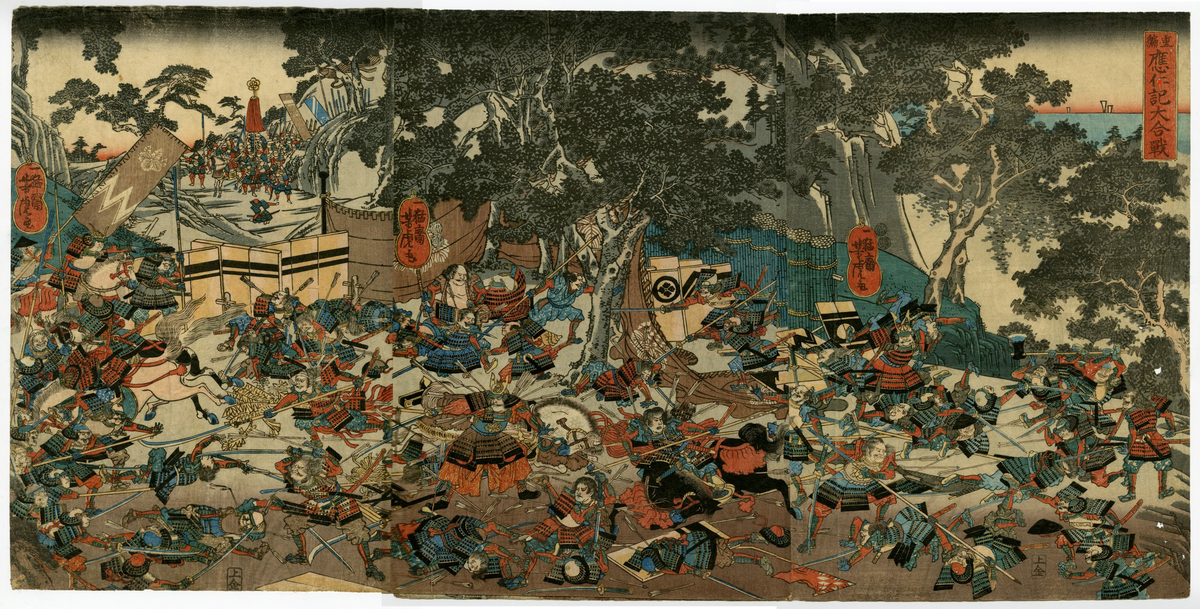
The Onin War and the Sengoku Period
Japan
Political
4 min read
Updated By: History Editorial Network (HEN)
Published:
Amidst the political turmoil in Japan, the Ōnin War erupted due to power struggles between various feudal lords. The conflict quickly escalated, with different factions vying for control, plunging the country into a tumultuous period known as the Sengoku era.
The war originated from disputes over the shogunate's leadership and territorial ambitions. Initially confined to the capital of Kyoto, the violence and chaos spread across the country, as regional daimyos took sides and clashed in bloody battles. The conflict's intensity and duration devastated the land and left a legacy of economic hardship and social upheaval in its wake.
The Ōnin War's protracted nature and the fragmentation of authority laid the groundwork for the emergence of powerful warlords and the breakdown of central governance. This power vacuum fueled intense rivalries and led to an era of continuous warfare and instability. The subsequent Sengoku period was marked by incessant military campaigns, alliances of convenience, and betrayals as daimyos sought to expand their influence and domains.
The repercussions of the Ōnin War reverberated throughout Japanese society, as the traditional feudal order eroded, giving rise to a new social hierarchy based on military might and strategic alliances. The period was characterized by shifting allegiances, elaborate fortifications, and innovative military tactics as warlords vied for supremacy in a fractured landscape.
The Ōnin War's onset marked the beginning of a transformative chapter in Japanese history, where the country was engulfed in conflict and instability for decades to come. This turbulent period laid the foundation for the rise of prominent daimyos and the eventual reunification of Japan under a central authority.
#Japan #ŌninWar #Sengokuperiod #FeudalJapan
Explore the Life Moments of
 AI Twin