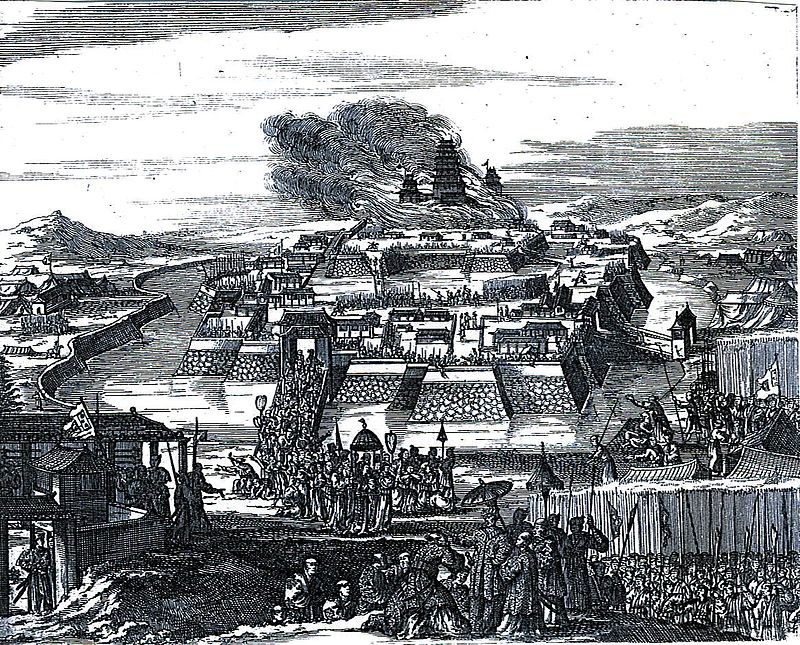
The Siege of Osaka: Defeat of Toyotomi clan
Osaka Castle, Osaka, Japan
Politics
3 min read
Updated By: History Editorial Network (HEN)
Published:
Updated:
In November 1614, the Siege of Osaka commenced, initiating a major military campaign by the Tokugawa shogunate against the Toyotomi clan. The conflict centered on Osaka Castle, the stronghold of Toyotomi Hideyori, the son of Toyotomi Hideyoshi, who had unified much of Japan in the late 16th century. Following the establishment of Tokugawa rule after the Battle of Sekigahara in 1600, tensions remained between the Tokugawa leadership and the Toyotomi family, who continued to command loyalty and resources.
The initial phase, known as the Winter Campaign (1614), involved Tokugawa Ieyasu mobilizing a large force and surrounding Osaka Castle. Despite heavy fighting, including artillery exchanges and defensive fortifications, the campaign ended in a negotiated truce. However, the agreement required the Toyotomi side to dismantle outer defenses, weakening their position. Hostilities resumed in 1615 during the Summer Campaign, when Tokugawa forces returned to complete the siege.
By mid-1615, Osaka Castle fell after intense battles, and Toyotomi Hideyori died during the final assault. The destruction of the Toyotomi clan removed the last significant opposition to Tokugawa authority. Following the siege, the Tokugawa shogunate consolidated its control over Japan, ushering in a prolonged period of relative internal stability under centralized military rule.
#SiegeOfOsaka
#TokugawaIeyasu
#ToyotomiClan
#EdoPeriod
#JapaneseHistory
Primary Reference
Siege of Osaka

Explore the Life Moments of
 AI Twin