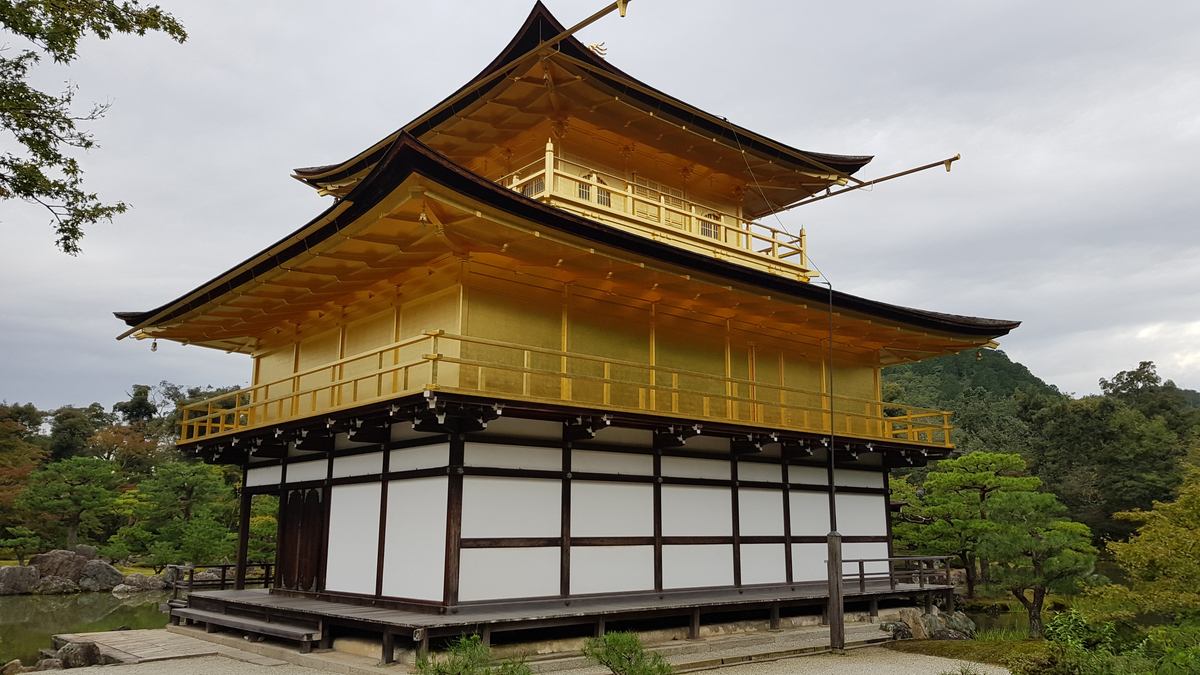
Completion of the Golden Pavilion at Kinkaku-ji
Japan
Culture
3 min read
Updated By: History Editorial Network (HEN)
Published:
In 1397, the construction of the Kinkaku-ji, known as the Golden Pavilion, in Japan was completed. The temple was originally built as a retirement villa for shogun Ashikaga Yoshimitsu. After his death, the villa was converted into a Zen Buddhist temple following his final wishes.
The Golden Pavilion is located in Kyoto, surrounded by beautiful gardens and a tranquil pond. The temple's top two floors are adorned with gold leaf, reflecting in the surrounding koi pond, creating a breathtaking sight. The architecture of the Kinkaku-ji combines traditional Japanese design with influences from the Chinese Song dynasty, resulting in a unique and stunning structure.
The completion of the Golden Pavilion had a significant impact on Japanese architecture and culture. It became a symbol of wealth and prosperity, showcasing the wealth and power of the Ashikaga shogunate. The temple also served as a place of meditation and reflection for Zen Buddhist monks, contributing to the spread of Zen Buddhism in Japan.
Today, the Kinkaku-ji is a UNESCO World Heritage site and one of the most iconic landmarks in Japan. It attracts thousands of visitors from around the world who come to admire its beauty and tranquility. The temple's reflection in the pond, the meticulously manicured gardens, and the golden glow of the pavilion make it a must-see destination for anyone visiting Kyoto.
#Kinkakuji #GoldenPavilion #Japan #UNESCOWorldHeritage #ZenBuddhism

Explore the Life Moments of
 AI Twin