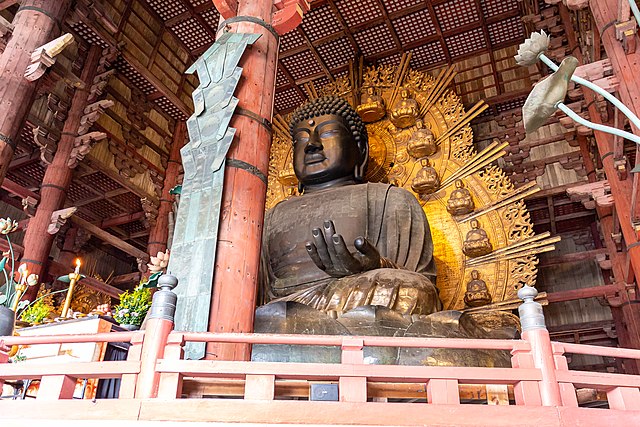
The Great Buddha of Nara in Todai-ji Temple at 15 meters tall
Todai-ji Temple, Nara, Japan
Art
4 min read
Updated By: History Editorial Network (HEN)
Published:
Updated:
In 0748, the construction of the Great Buddha (Daibutsu) at Todai-ji Temple in Nara, Japan, was nearing completion, marking one of the most ambitious religious and engineering efforts of the Nara period. Commissioned under Emperor Shōmu, the bronze statue was designed to represent Vairocana Buddha and stood approximately 15 meters tall, making it one of the largest bronze Buddha statues in the world at the time. The project formed part of a broader state initiative to promote Buddhism as a unifying force across Japan during a period of political instability and natural disasters.
The statue’s creation required vast resources and labor, involving artisans, metalworkers, and support from provincial regions across the country. Historical records indicate that large quantities of copper, gold, mercury, and charcoal were used in the casting process. The effort placed significant demands on the imperial treasury and local populations. Todai-ji itself became the head temple of a nationwide system of provincial temples, reinforcing its central role in religious and administrative life. Although the formal consecration ceremony of the Great Buddha took place later in 752, by 0748 the statue had already taken its recognizable monumental form within the temple complex in Nara.
Over the centuries, the Great Buddha has undergone several restorations due to damage from earthquakes and fires, yet it remains a central cultural and religious symbol in Japan. Todai-ji Temple is now recognized as part of the UNESCO World Heritage Site “Historic Monuments of Ancient Nara,” designated in 1998.
#GreatBuddhaofNara
#TodaijiTemple
#JapaneseHistory
#BuddhistArt
#BuddhistArt
#CulturalIcon
Primary Reference
Tōdai-ji

Explore the Life Moments of
 AI Twin