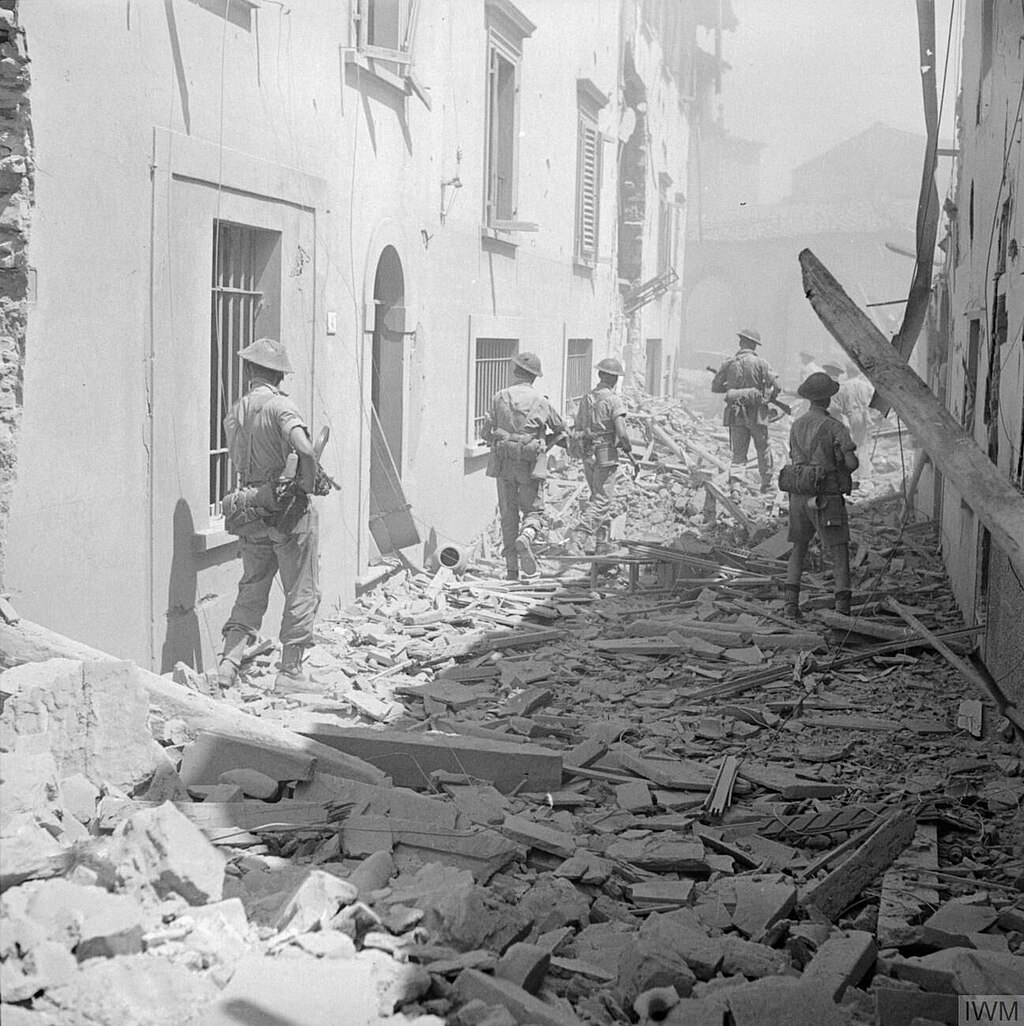
Allied troops free Rome, advancing to hit eastern German targets within weeks of liberation.
Italy

WWII
Military
9 min read
Updated By: History Editorial Network (HEN)
Published:
Updated:
On June 4, 1944, Allied forces achieved a significant victory by liberating Rome from Axis control during World War II. This moment marked the first Axis capital to fall to the Allies and symbolized a major shift in the Italian Campaign. The liberation of Rome was part of a broader strategy to weaken German forces in Italy and pave the way for further advances into occupied Europe.
Background: The Italian Campaign
The Italian Campaign began in earnest with the Allied invasion of Sicily in July 1943, followed by landings on the Italian mainland in September 1943. Italy, under Benito Mussolini, had been a member of the Axis powers. However, by the summer of 1943, the Italian government, recognizing the deteriorating situation, overthrew Mussolini and sought an armistice with the Allies.
Despite Italy’s surrender, German forces quickly moved to occupy much of the country, turning it into a battleground between the Allies and Axis forces. The Allies aimed to draw German troops away from the Eastern and Western Fronts, weaken German defenses, and establish a foothold for an eventual advance into the heart of Europe.
Battle for Rome
The battle for Rome was a crucial phase of the Italian Campaign. The city was heavily defended by German forces under the command of Field Marshal Albert Kesselring. Allied forces, including American and British troops, faced tough resistance as they advanced northward from the Gustav Line, a series of German defensive positions in central Italy.
Operation Diadem, launched in May 1944, was the final Allied offensive aimed at breaking through the Gustav Line and advancing towards Rome. The operation involved coordinated attacks from multiple directions, including a crucial assault by the French Expeditionary Corps and the U.S. Fifth Army led by General Mark Clark. The intense fighting included the infamous Battle of Monte Cassino, which saw the historic abbey of Monte Cassino destroyed in the crossfire.
After weeks of fierce combat, the Allies succeeded in breaching German defenses. On June 4, 1944, General Clark’s Fifth Army entered Rome, encountering minimal resistance as the German forces had strategically withdrawn to avoid being encircled. The liberation of Rome was greeted with jubilation by the city's residents and marked a significant propaganda victory for the Allies.
Significance of Rome’s Liberation
The fall of Rome was the first liberation of an Axis capital and had significant military and psychological impacts. It demonstrated the increasing effectiveness of Allied operations in Europe and weakened German strategic positions in Italy. The liberation also boosted Allied morale and provided a much-needed propaganda victory.
However, the victory in Rome came with some controversy. General Clark faced criticism for prioritizing the capture of Rome over the opportunity to cut off and potentially destroy large numbers of retreating German troops. This decision allowed many German forces to escape and regroup north of Rome, prolonging the Italian Campaign.
The Road Ahead
The liberation of Rome was swiftly followed by preparations for Operation Overlord, the Allied invasion of Normandy, which commenced on June 6, 1944. This event, known as D-Day, marked the beginning of a massive Allied push into German-occupied Western Europe. The timing of Rome’s liberation just two days before D-Day served to galvanize Allied forces and further stretched German military resources.
Following the liberation of Rome, Allied forces continued their advance northward through Italy. The Italian Campaign would drag on until April 1945, as German forces executed a stubborn and effective defensive strategy in the mountainous terrain of northern Italy. The eventual Allied victory in Italy contributed to the broader collapse of Nazi Germany, culminating in the unconditional surrender of German forces in May 1945.
Legacy
The liberation of Rome stands as a testament to the strategic importance and the complexities of the Italian Campaign. It was a critical step in the Allies' path to victory in Europe, showcasing their ability to coordinate large-scale operations and maintain momentum across multiple fronts. The capture of Rome also highlighted the sacrifices and tenacity of the Allied soldiers who fought in the arduous Italian terrain.
#MomentsOfLife #MoofLife_Moment #MoofLife #LiberationOfRome #WWII #AlliedForces #ItalianCampaign #Rome1944 #OperationDiadem #HistoricalVictory
Primary Reference
Italian campaign (World War II)

Explore the Life Moments of
 AI Twin