Newton's Innovations in Reflecting Telescopes
Science
Astronomy
5 min read
Updated By: History Editorial Network (HEN)
Published:
Updated:
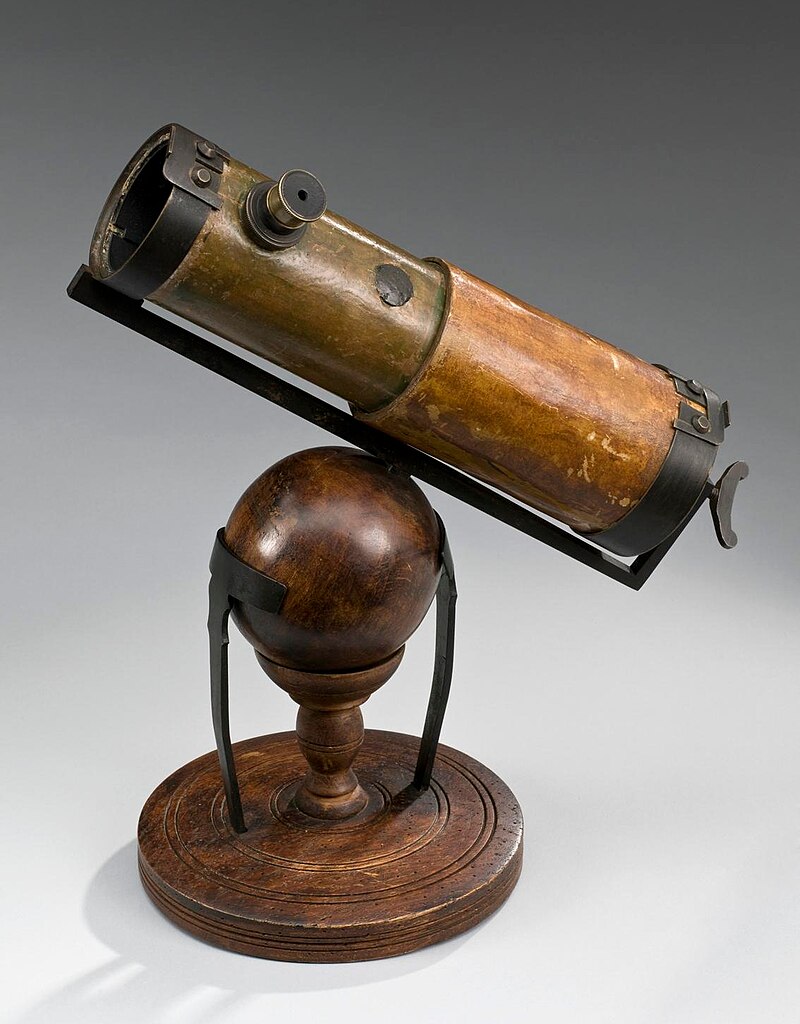
Isaac Newton's innovations in reflecting telescopes marked a pivotal advancement in the field of optics and astronomy. In the late 1660s, he developed the first practical reflecting telescope, which utilized a curved mirror instead of the traditional lenses used in refracting telescopes. This design was approximately eight inches long and provided a clearer and larger image, addressing the limitations of refracting telescopes that suffered from chromatic aberration. The reflecting telescope's ability to gather more light and produce sharper images made it a significant tool for astronomers. Newton's work gained recognition when he was invited to demonstrate his telescope to the Royal Society, which led to increased interest in his findings and prompted him to publish his notes on optics. This publication, initially titled 'Of Colours,' was later expanded into the comprehensive work 'Opticks,' which explored the nature of light and color. The Royal Society's endorsement of Newton's telescope not only validated his contributions but also laid the groundwork for future developments in optical instruments.
The impact of Newton's reflecting telescope extended beyond its immediate use in astronomy. It represented a shift in the scientific community's approach to understanding light and optics. By employing a mirror rather than lenses, Newton's design minimized optical distortions and allowed for larger telescopes to be constructed without the limitations imposed by glass lenses. This innovation paved the way for the development of larger and more powerful telescopes in the following centuries, fundamentally changing the way astronomers observed celestial bodies. The principles established by Newton's work continue to influence modern telescope design, and his contributions to optics are recognized as foundational in the field of physics. The legacy of Newton's reflecting telescope is evident in contemporary astronomical research, where advanced telescopes utilize similar principles to explore the universe.
#mooflife
#MomentOfLife
#Newton
#ReflectingTelescope
#Optics
#Astronomy
#ScientificInnovation

Explore the Life Moments of
 AI Twin