Iran Holds State Funeral for Former Supreme Leader Ayatollah Ali Khamenei After Wartime Delay
Tehran, Qom and Mashhad, Iran; Najaf and Karbala, Iraq
Political
6 min read
Updated By: History Editorial Network (HEN)
Published:
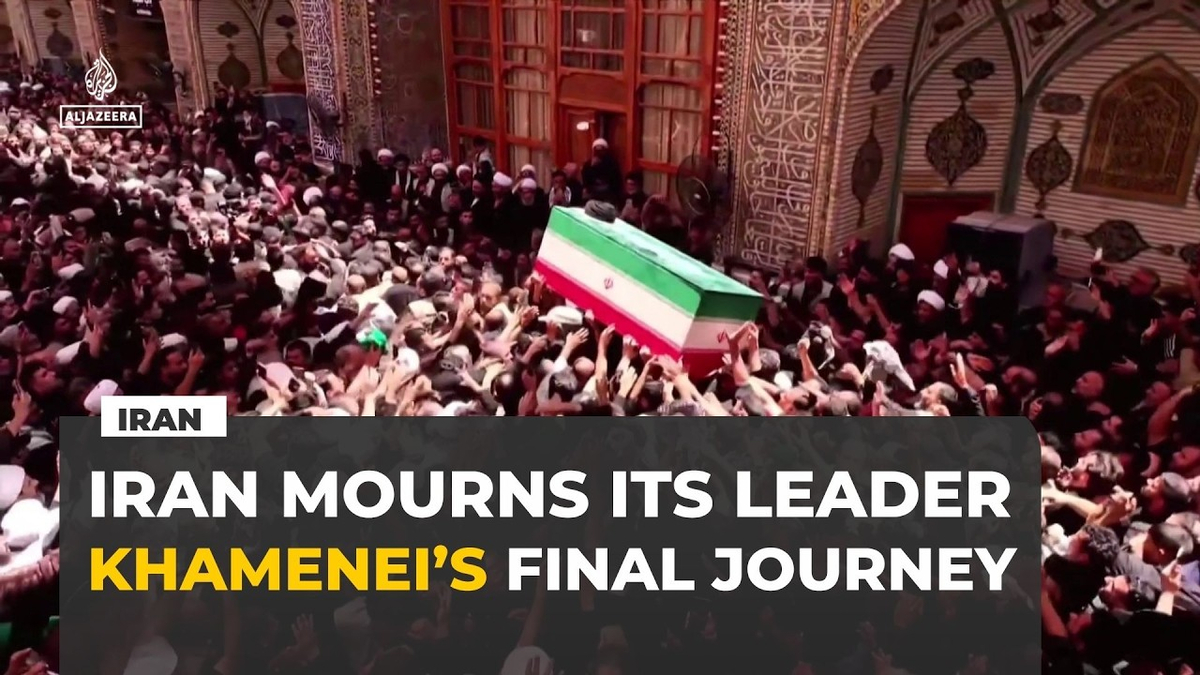
Iran held the official state funeral for former Supreme Leader Ayatollah Ali Khamenei from 03/07/2026 to 09/07/2026, more than four months after his death during the opening phase of the 2026 Iran war. Khamenei was killed on 28/02/2026 at the age of 86 when combined United States and Israeli airstrikes struck his compound in central Tehran. Iranian authorities delayed the funeral because of the ongoing conflict and security conditions, before organizing a week long series of ceremonies across Iran and Iraq following the announcement of a preliminary ceasefire framework.
The funeral began in Tehran on 3 July with official memorial events and public processions that drew large crowds of government supporters. State organized ceremonies featured religious observances, speeches, and anti Western slogans, while authorities framed Khamenei's death as martyrdom in official messaging. On 5 and 6 July, the coffins were flown to Iraq, where processions passed through the Shia holy cities of Najaf and Karbala, including visits to the shrines of Imam Ali and Imam Hussein. The ceremonies returned to Qom on 7 July before concluding in Mashhad, Khamenei's birthplace, where he was buried on the morning of 09/07/2026 within the Imam Reza shrine.
Iranian officials estimated that approximately 15 million people attended the week long mourning events across all locations, placing the funeral among the largest public funeral gatherings ever reported. International delegations also attended, including the prime minister of Pakistan, presidents from several neighboring countries, and diplomatic representatives from China and other regional partners. Security remained exceptionally tight throughout the ceremonies because of continuing regional tensions and concerns over possible attacks.
The funeral took place during a period of political transition following the appointment of Mojtaba Khamenei as Iran's new Supreme Leader on 08/03/2026. Although officially succeeding his father, Mojtaba did not appear publicly during the funeral, with multiple reports attributing his absence to injuries sustained in the February attack and ongoing security concerns. Independent reporting also noted that while state media highlighted large crowds of supporters, many Iranians who opposed the clerical establishment did not participate in the mourning events following years of political unrest and domestic crackdowns.
Historical Significance:
The funeral marked the formal conclusion of Ali Khamenei's leadership after nearly four decades as Iran's Supreme Leader while also serving as the first major nationwide state ceremony following the outbreak of the 2026 Iran war. It unfolded alongside early diplomatic efforts to reduce hostilities, illustrating how state ritual, political succession, and regional diplomacy became closely intertwined during a period of armed conflict.
#Iran
#AliKhamenei
#StateFuneral
#Mashhad
#Tehran
#MiddleEast
#IranWar2026
#History

Explore the Life Moments of
 AI Twin