Impact of Cultivation System on Economy and Labor in Dutch East Indies.
Indonesia

Colonial Exploitation
Economic Impact
6 min read
Updated By: History Editorial Network (HEN)
Published:
The Dutch East Indies experienced a profound shift with the introduction of the Cultivation System. Implemented by the colonial administration, its primary aim was to increase revenue from the resource-rich Indonesian archipelago by restructuring its agricultural economy.
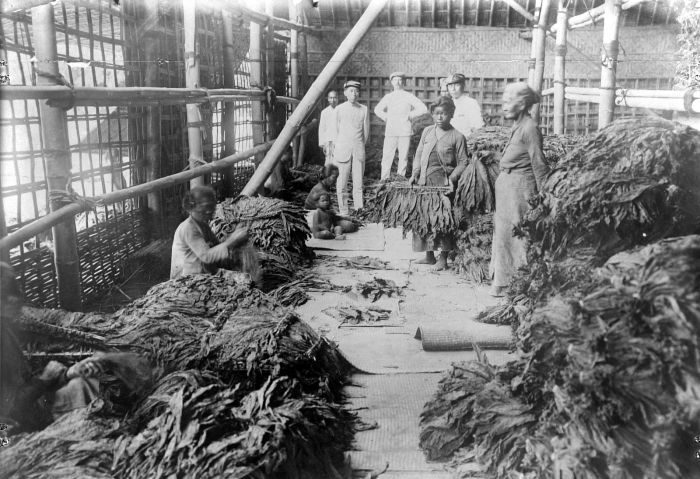
Under this system, local farmers were required to allocate a portion of their land and labor to the cultivation of export crops such as sugar, coffee, indigo, and spices. These crops were then sold to the colonial government at fixed prices, which were often significantly lower than the market value. The government, in turn, exported these products to the European market, leading to substantial profits for the Dutch economy.
However, this imposed agricultural strategy brought severe ramifications for the indigenous population. Farmers who previously grew rice and other staple crops for their sustenance were now forced to dedicate a large part of their production capacity to cash crops. This shift caused widespread food shortages and increased vulnerability to famine among local communities. In some regions, estimates suggest that enforced labor required for these state-mandated crops consumed up to 20% of a farmer's working time.
Additionally, the system institutionalized forced labor practices. Farmers, referred to as 'cultivators', were coerced into dedicating their time and land to fulfill the imposed quotas. Those who failed to meet these targets faced harsh penalties, including fines and physical punishment. This practice consequently eroded traditional agricultural practices and local autonomy, essentially transforming the peasantry into a coerced labor pool for colonial profit.
The Cultivation System vastly increased the exploitation of the region's natural and human resources. It also intensified social inequities and economic hardships for the indigenous population while enriching the colonial coffers. By channeling the economic benefits predominantly to the colonial authorities and Dutch traders, it highlighted the extractive nature of colonial rule in Southeast Asia.
The repercussions of the Cultivation System laid the groundwork for future economic and social transformations in the Indonesian archipelago. It exposed the stark inequalities between the colonizers and the colonized, setting a precedent for subsequent policies and resistance movements in the region.
#CultivationSystem #DutchEastIndies #ForcedLabor #ColonialExploitation #AgriculturalEconomy #IndonesianHistory #EconomicImpact #MoofLife

Explore the Life Moments of
 AI Twin