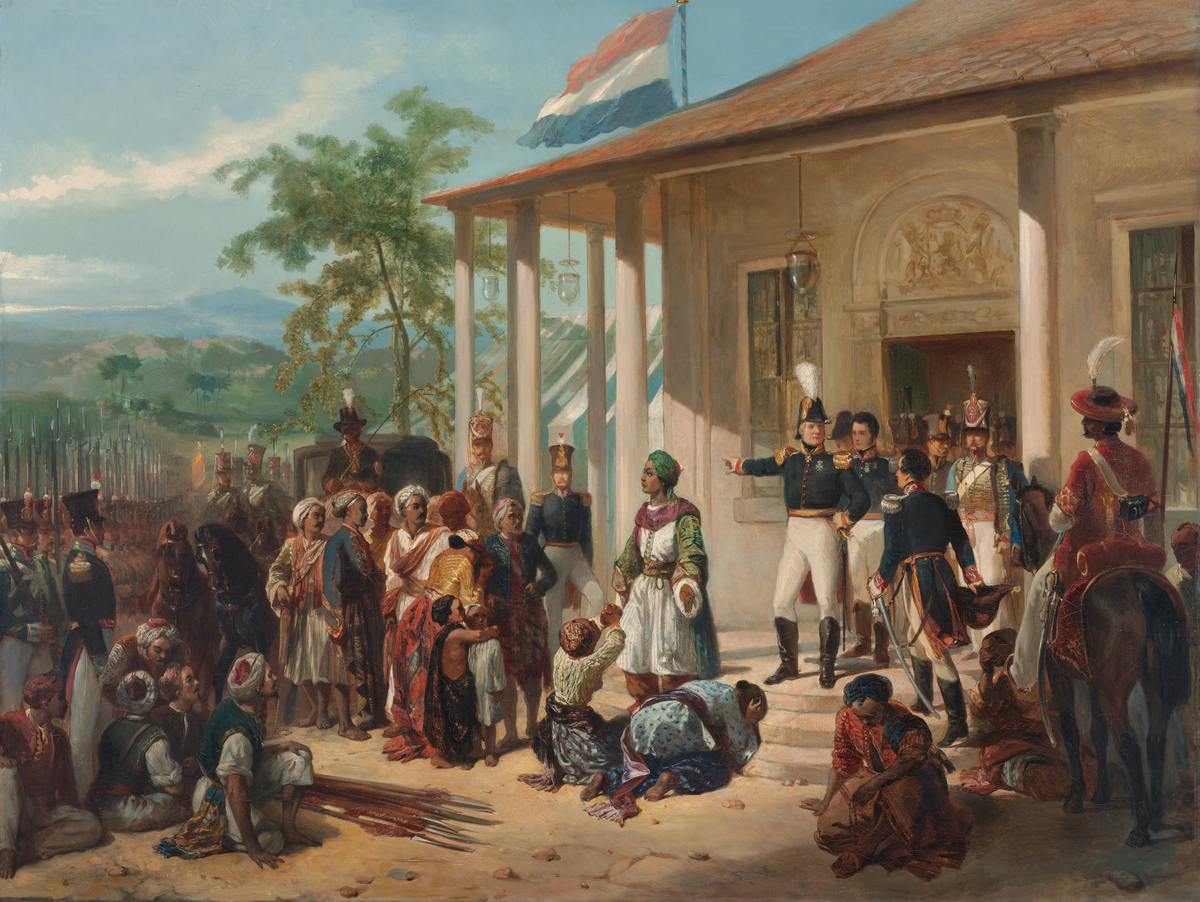
End of Java War: Prince Diponegoro captured, Javanese resistance to Dutch rule wanes.
Indonesia

PoliticalEvents
6 min read
Updated By: History Editorial Network (HEN)
Published:
The capture of Prince Diponegoro marked the effective end of the Java War and a significant reduction of Javanese resistance to Dutch colonial rule in Indonesia. The Java War, also known as the Diponegoro War, involved a conflict between the Javanese people, led by Prince Diponegoro, and the Dutch colonial authorities. This war, stemming largely from discontent with Dutch policies and encroachments on Javanese land, mobilized both elite and common Javans in sustained opposition.
Prince Diponegoro was a charismatic leader and figurehead of Javanese nationalism. His leadership galvanized various segments of the Javanese society, including nobles and peasants, in a broad-based uprising against the Dutch. The war wreaked havoc on Java's infrastructure and economy, leading to significant civilian casualties and displacement. The Dutch, determined to crush the rebellion, employed both military force and diplomatic tactics.
One of the critical strategies employed by the Dutch was the establishment of fortified posts and the construction of roads to facilitate troop movements. The Dutch colonial army, bolstered by superior weaponry and numbers, gradually wore down the Javanese forces. Prince Diponegoro, initially effective in guerilla warfare tactics, found his support dwindling over time due to both the protracted nature of the conflict and the Dutch divide-and-conquer strategies.
The turning point in the conflict came when the Dutch, through a combination of deceit and military pressure, succeeded in negotiating a meeting with Prince Diponegoro under the guise of truce talks. During this meeting, the Dutch authorities arrested Prince Diponegoro, effectively dismantling the leadership of the Javanese resistance. With the capture of their leader, the morale of the Javanese forces plummeted, leading to the cessation of organized resistance.
The aftermath of the Java War had lasting impacts on Indonesian society. Dutch colonial control over Java was solidified, paving the way for more profound administrative and economic exploitation. The significant loss of life and livelihoods during the war period also marked a tragic chapter in Javanese history.
Prince Diponegoro was exiled, and his capture remained a stark reminder of the ruthlessness of colonial rule. The event underlined the harsh reality of colonial dominance and the struggles inherent in resistance movements.
This marked a critical juncture in Indonesian colonial history, illustrating the complexities of colonial power dynamics and the profound impacts on local populations.
#MoofLife #JavaWar #PrinceDiponegoro #DutchColonialism #IndonesianHistory #Resistance #ColonialRule #HistoricalEvents
Primary Reference
Raden Saleh's Interpretation of the Arrest of Diponegoro : an ...

Explore the Life Moments of
 AI Twin