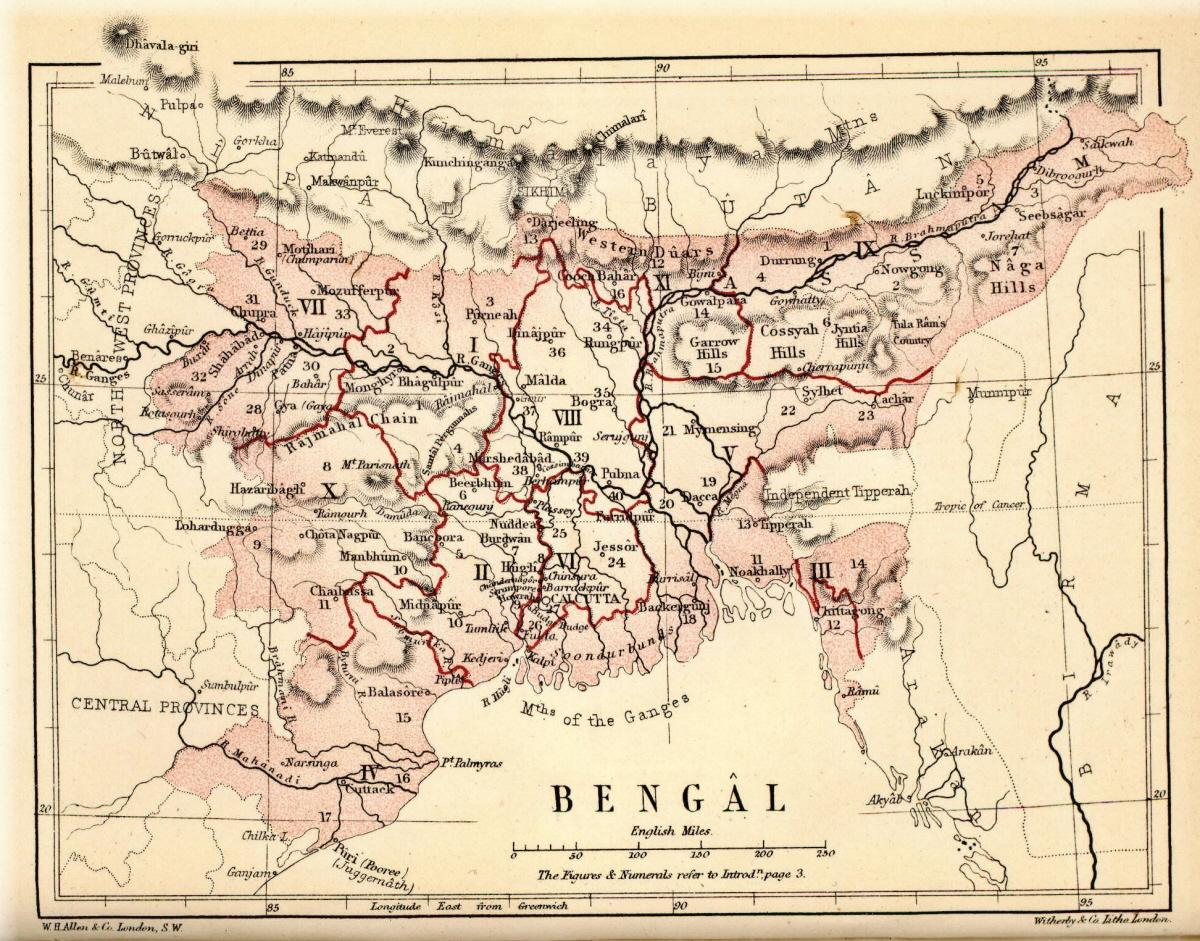
Partition of Bengal: Divide and Governor-General's shuffle for administrative and communal reasons.
Political
5 min read
Updated By: History Editorial Network (HEN)
Published:
The Partition of Bengal separated the Bengal region in British India into two distinct entities: Bengal and East Bengal and Assam. The decision was driven primarily by administrative concerns but was met with resistance from various factions, including political figures, educators, and the general populace. The official reasoning behind the partition was to improve the efficiency of governance in the large Bengal province, with the aim of better serving the diverse population. However, the move sparked widespread protests and boycotts as it was seen as an attempt to divide the Bengali-speaking population along religious lines, as East Bengal had a Muslim majority while Bengal had a Hindu majority.
The backlash against the partition was intense, with public demonstrations, strikes, and acts of civil disobedience becoming commonplace. Notably, the Indian National Congress, under the leadership of prominent figures like Surendranath Banerjee and Sir Henry Cotton, played a crucial role in organizing and leading the opposition to the partition. The Swadeshi movement, which called for the promotion of Indian goods and the boycott of British products, gained momentum as a direct response to the partition.
The widespread protests and opposition eventually led to the reversal of the partition in 1911, as the British government sought to quell growing unrest and consolidate its control over its Indian territories. The reunification of Bengal was hailed as a victory for the Indian nationalist movement and a testament to the power of unified resistance against colonial policies.
In the aftermath of the partition and its subsequent annulment, the event left a lasting impact on Indian society and politics. It fueled a sense of unity and solidarity among Indians of different backgrounds and laid the foundation for future anti-colonial struggles. The Partition of Bengal remains a poignant symbol of the strength of collective action and the importance of preserving unity in the face of divisive policies.
#PartitionOfBengal #Bengal #SwadeshiMovement #IndianNationalism

Explore the Life Moments of
 AI Twin