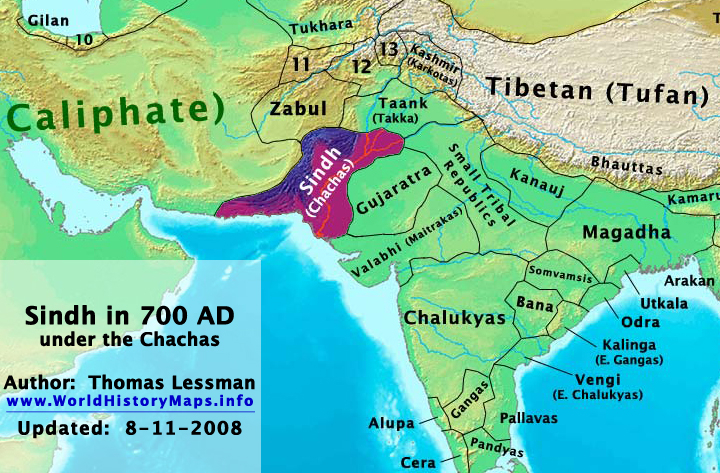
Muhammad bin Qasim defeats Raja Dahir in Sindh Region
Political
4 min read
Updated By: History Editorial Network (HEN)
Published:
In the early 8th century, Muhammad bin Qasim led the Umayyad Caliphate's campaign into the Sindh region, challenging Raja Dahir's rule. This conquest marked a pivotal moment in the expansion of the Muslim influence in the Indian subcontinent.
Raja Dahir, the king of Sindh, faced the advancing forces of Muhammad bin Qasim, who aimed to establish control over the region. Despite fierce resistance, Raja Dahir was defeated, leading to the fall of his kingdom and the incorporation of Sindh into the Umayyad Caliphate.
Muhammad bin Qasim's victory had far-reaching consequences. It paved the way for the spread of Islam in the Indian subcontinent, as the region gradually came under Muslim rule. The conquest of Sindh established a lasting Muslim presence in the area, influencing its culture, society, and political landscape for centuries to come.
The defeat of Raja Dahir by Muhammad bin Qasim signaled a shift in power dynamics in the region, as the Umayyad Caliphate consolidated its control over new territories. The event also highlighted the military prowess and strategic acumen of the Arab commander, solidifying his reputation as a skilled leader.
Overall, the conquest of Sindh by Muhammad bin Qasim was a significant chapter in Indian history, shaping the religious and political landscape of the region. It marked the beginning of a new era of Muslim rule in the subcontinent, leaving a lasting impact that resonates to this day.
#MuhammadBinQasim #RajaDahir #MuslimConquest #SindhRegion #IndianHistory #UmayyadCaliphate

Explore the Life Moments of
 AI Twin