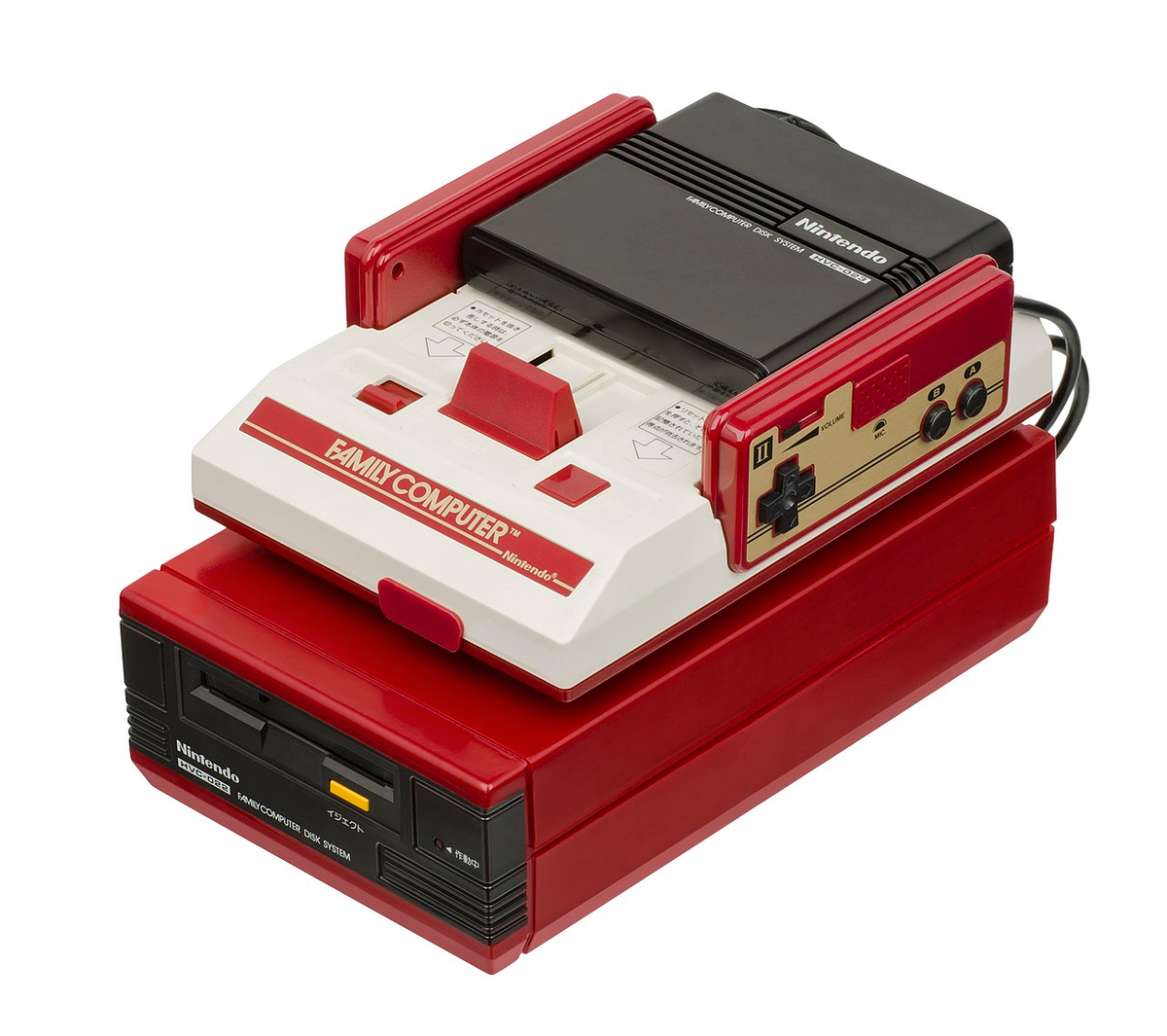
Launch of the Nintendo Family Computer (Famicom) in Japan
Japan
3 min read
Updated By: History Editorial Network (HEN)
Published:
Nintendo released the Family Computer—commonly known as the Famicom—in Japan. The cartridge-based console marked Nintendo’s entry into the home video game hardware market and followed the company’s earlier success in arcades during the early 1980s.
The Famicom was designed under the direction of Masayuki Uemura and featured a custom 8-bit processor based on the Ricoh 2A03. The console launched at a retail price of ¥14,800. Initial launch titles included home versions of Donkey Kong, Donkey Kong Jr., and Popeye, adapting Nintendo’s arcade games for television play. The system used interchangeable ROM cartridges, allowing players to expand their game libraries over time.
Shortly after release, early production units experienced hardware issues related to faulty chips, prompting Nintendo to recall affected consoles and address the defects before relaunching the system later in 1983. Following these corrections, sales increased steadily in Japan. By the end of 1984, the Famicom had sold millions of units domestically, establishing a strong install base before its international debut.
In 1985, a redesigned version of the console was introduced in North America as the Nintendo Entertainment System (NES). Over its lifespan, the Famicom and NES family of systems sold more than 60 million units worldwide. The launch of the Famicom on 15/07/1983 initiated Nintendo’s long-term presence in the home console market.
#Nintendo #Famicom #VideoGameHistory #1983 #RetroGaming
Primary Reference
Famicom_Disk_System

Explore the Life Moments of
 AI Twin