Ignaz Semmelweis reduces death rate
Vienna, Austria
Medical History
Public Health
Childbirth Practices
3 min read
Updated By: History Editorial Network (HEN)
Published:
Updated:
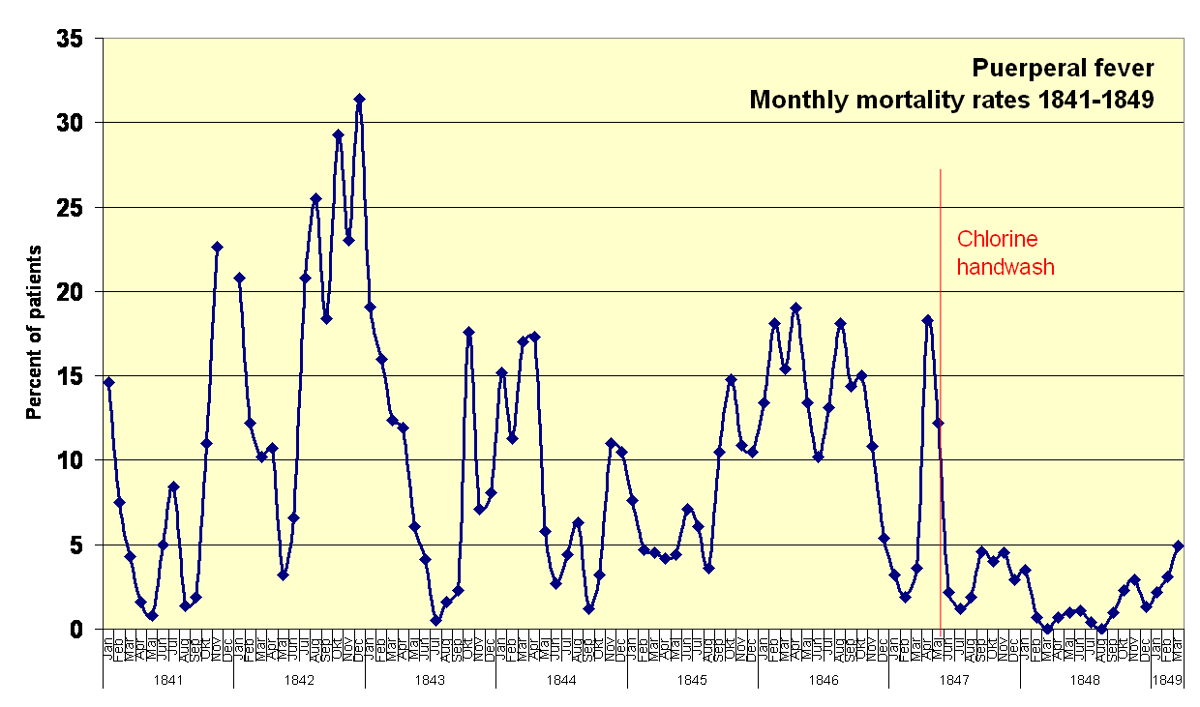
In Vienna, Ignaz Semmelweis implemented a protocol that significantly lowered the mortality rate among new mothers suffering from childbed fever. This condition, also known as puerperal fever, was a major cause of maternal deaths during childbirth. Semmelweis observed that the death rate in the maternity ward staffed by physicians was considerably higher than in the ward attended by midwives. He hypothesized that the physicians were transmitting infectious material from cadavers to the mothers during examinations. To combat this, he mandated that all medical staff wash their hands with a chlorinated lime solution before attending to patients. This simple yet effective measure led to a dramatic decrease in the incidence of childbed fever, showcasing the importance of hygiene in medical practices. Despite the clear evidence of his findings, Semmelweis faced significant opposition from the medical community, which largely rejected his ideas, leading to his marginalization and eventual decline in professional standing. His work laid the groundwork for future advancements in antiseptic techniques and the understanding of infection control in healthcare settings.
#mooflife
#MomentOfLife
#IgnazSemmelweis
#ChildbedFever
#HandHygiene
#MaternalHealth
#MedicalHistory
Primary Reference
Ignaz Semmelweis

Explore the Life Moments of
 AI Twin