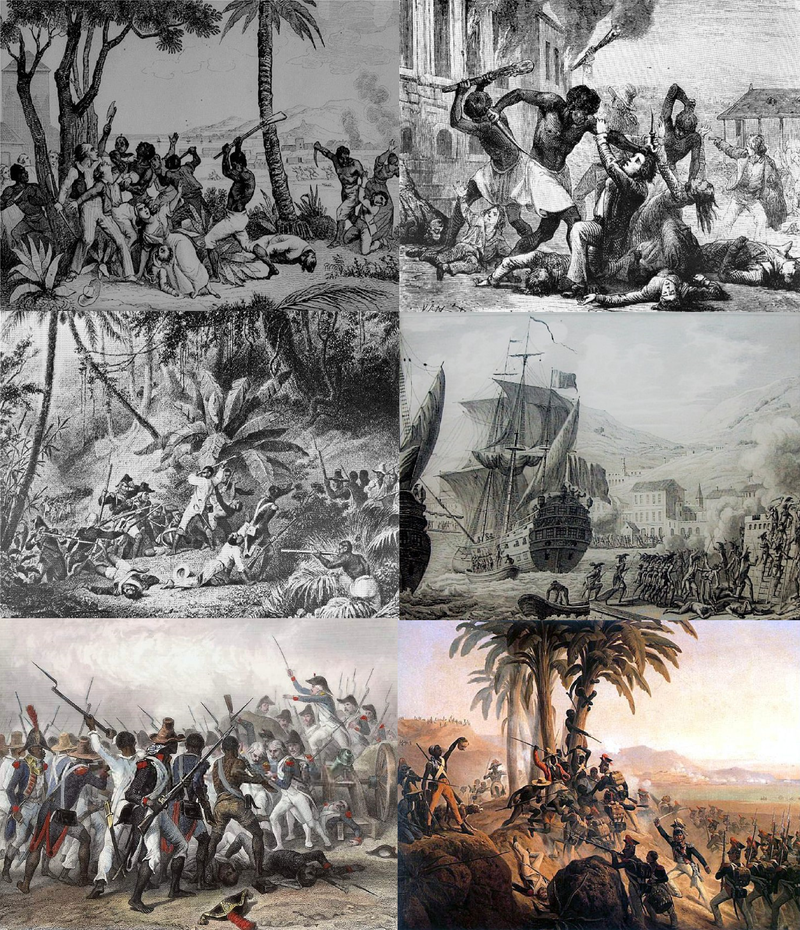
The 1791 Slave Uprising: Start of Haitian Revolution
Haiti

Global Trade
4 min read
Updated By: History Editorial Network (HEN)
Published:
The 1791 Slave Uprising in Haiti was a pivotal event that ignited the Haitian Revolution against French colonial rule. Born out of the brutal conditions of slavery and inspired by the ideals of the French Revolution, the enslaved people of Saint-Domingue rose up in rebellion, led by figures such as Dutty Boukman and Toussaint Louverture.
The uprising began in the northern region of the colony and quickly spread, as thousands of enslaved men and women took up arms against their oppressors. Plantations were set ablaze, and white planters and their families were targeted in the violence that ensued. The rebels fought fiercely against the French forces, showing remarkable courage and determination in their quest for freedom.
The impact of the uprising was profound, not only in Haiti but also on a global scale. It challenged the institution of slavery and inspired other revolts and independence movements in the Caribbean and beyond. The Haitian Revolution eventually led to the establishment of Haiti as the first independent black republic in the Western Hemisphere, delivering a significant blow to the institution of slavery and colonialism.
Today, the legacy of the 1791 Slave Uprising in Haiti lives on as a symbol of resistance and liberation. It serves as a reminder of the power of collective action in the face of oppression, and the enduring struggle for equality and justice. The heroes of the Haitian Revolution continue to inspire generations to fight for freedom and dignity, standing as a beacon of hope for all those who seek to break the chains of tyranny.
#HaitianRevolution #SlaveUprising #AntiColonialism #FreedomFighters

Explore the Life Moments of
 AI Twin