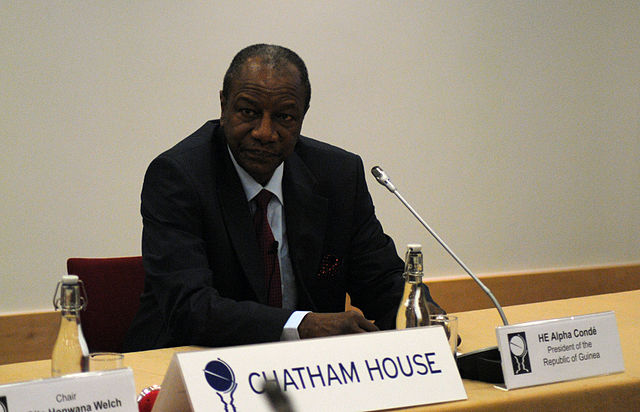
President Conde's party wins parliamentary elections amid fraud allegations, upheld by Supreme Court.
Guinea
Political
Electoral Dispute
6 min read
Updated By: History Editorial Network (HEN)
Published:
President Alpha Conde's party secured a victory in the parliamentary elections, a development that has substantial implications for the political landscape in Guinea. This election marked a critical juncture, as it was the first parliamentary poll since 2002, making it a pivotal moment in the country's political progression. The opposition, however, quickly raised concerns about the legitimacy of the results, alleging widespread electoral fraud, including reports of voter intimidation and ballot tampering.
Despite these allegations, Guinea's Supreme Court upheld the election results. The Court's decision was based on its interpretation of the electoral process and available evidence. This ruling effectively solidified President Conde's political strength, granting his party a significant presence in the legislative body. For the opposition, this outcome raised serious concerns about democratic practices and transparency within the country. They argued that the judicial system was biased, further entrenching a system that deprives the populace of fair representation.
The backdrop to these events is Guinea's recent history marked by political instability and a military coup in 2008. President Conde himself had come to power in 2010 in the aftermath of these tumultuous times, promising to bring stability and democratic reforms. The parliamentary elections were supposed to be a step towards fulfilling that promise.
Guinea's parliamentary system allocates a total of 114 seats, and President Conde's Rally of the Guinean People party, alongside its allies, obtained a majority. This majority enables the President to push through his legislative agenda with reduced opposition interference. However, the controversy surrounding these elections cannot be overlooked; it exposes significant fractures within the country's political framework and raises questions about governance and electoral integrity.
International observers had a varied response. Some acknowledged the inherent challenges but noted improvements in the electoral process compared to past elections. Others echoed the opposition's concerns, citing irregularities and advocating for systemic reforms.
The electoral outcome and subsequent Supreme Court ruling are likely to have long-lasting effects on Guinea's political and social fabric. They highlight the ongoing struggle for genuine democratic governance and the challenges faced by institutions meant to uphold impartiality and justice.
#GuineaPolitics #ElectionDispute #SupremeCourt #AlphaConde #DemocracyChallenges #MoofLife
Primary Reference
Guinea profile - Timeline - BBC News

Explore the Life Moments of
 AI Twin