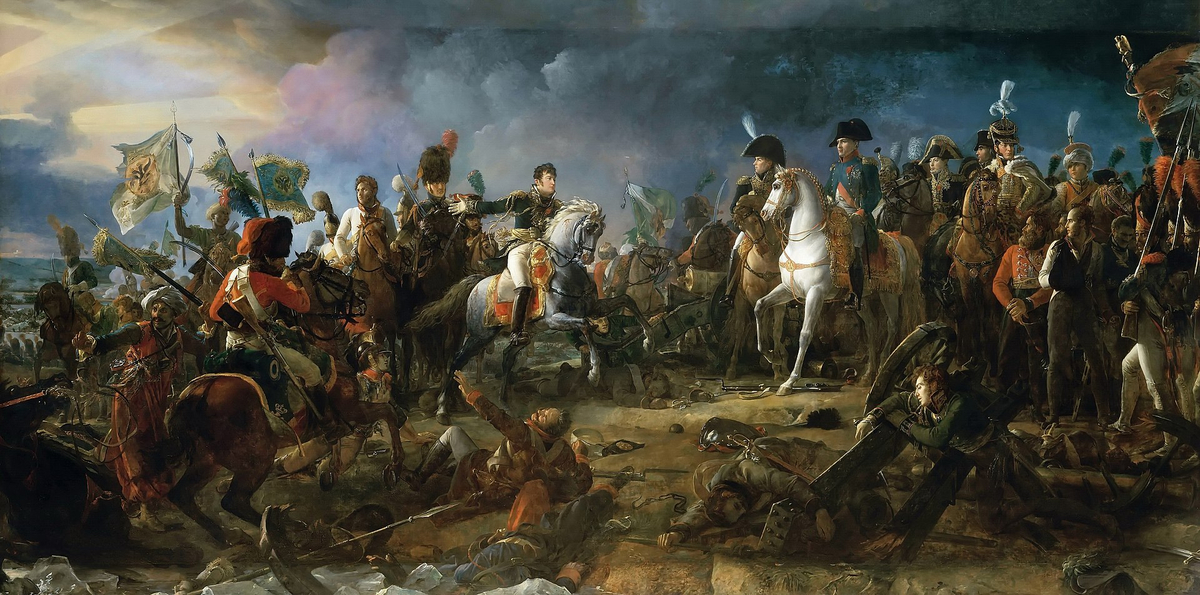
Napoleon's victory at Austerlitz: Turning point in European history and military strategy.
Rome
Political
Military
5 min read
Updated By: History Editorial Network (HEN)
Published:
Updated:
The Battle of Austerlitz, also known as the Battle of the Three Emperors, was a pivotal confrontation between Napoleon I of France and the combined forces of Russia and the Holy Roman Empire, led by Tsar Alexander I and Emperor Francis II, respectively. This conflict is widely regarded as Napoleon's most significant victory, showcasing his military genius and leading to a major reshaping of the European political landscape.
Prior to the battle, the Third Coalition, which included the United Kingdom, Russia, Austria, and others, sought to curtail Napoleon’s growing influence on the continent. The French army, numbering around 68,000 troops, faced a formidable allied force of approximately 85,000 soldiers. Despite being outnumbered, Napoleon's strategic acumen turned the tide.
One notable element of the preparations involved a misalignment between the calendars used by the opposing forces. The Russians adhered to the Julian calendar, while the rest of Europe utilized the Gregorian calendar, creating potential confusion in the coordination and planning of troop movements. This discrepancy may have contributed to communication and timing issues within the allied ranks.
The battle commenced at dawn with a feigned French retreat on the flanks, luring the allies into a vulnerable position. Napoleon then executed his main assault at the weakened center of the allied line, effectively splitting their forces. By the end of the day-long conflict, the allies suffered approximately 36,000 casualties, including killed, wounded, and captured soldiers, while French losses were significantly lower, totaling around 9,000.
The aftermath of Austerlitz marked the dissolution of the Third Coalition. Austria was forced to sign the Treaty of Pressburg, ceding territory and paying a substantial indemnity. The Holy Roman Empire, a millennia-old institution, was dissolved, paving the way for the establishment of the Confederation of the Rhine under French influence. This battle solidified Napoleon's dominance in Europe, altering the geopolitical landscape for years to come.
Hashtags capturing the essence of this transformative moment include #MoofLife, #Austerlitz, #Napoleon, #MilitaryStrategy, #EuropeanHistory, #JulianVsGregorian.

Explore the Life Moments of
 AI Twin