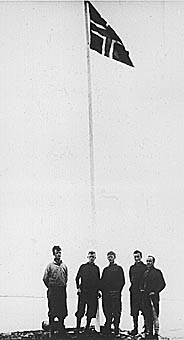
Significance of Greenland as Erik the Red's Land in July 1931
Exploration
Viking Studies
3 min read
Updated By: History Editorial Network (HEN)
Published:
Updated:
In July 1931, Norway occupied eastern Greenland, an area it referred to as Erik the Red's Land, asserting that it was terra nullius, or land belonging to no one. This claim was based on the belief that the region was uninhabited and thus available for occupation. The occupation sparked a diplomatic dispute between Norway and Denmark, which had historical ties to Greenland. To resolve the matter, both nations agreed to submit the issue to the Permanent Court of International Justice in 1933.
The court ultimately ruled against Norway, affirming Denmark's sovereignty over Greenland. This case is significant in international law as it highlights the principles of territorial claims and the concept of terra nullius, which has been a contentious topic in the context of colonialism and indigenous rights. The ruling reinforced Denmark's control over Greenland, shaping the geopolitical landscape of the Arctic region. The events of 1931 serve as a reminder of the complexities involved in territorial disputes and the importance of international legal frameworks in resolving such conflicts.
#Mooflife #MomentOfLife #Norway #Greenland #InternationalLaw #TerritorialDisputes #PermanentCourtOfInternationalJustice

Explore the Life Moments of
 AI Twin