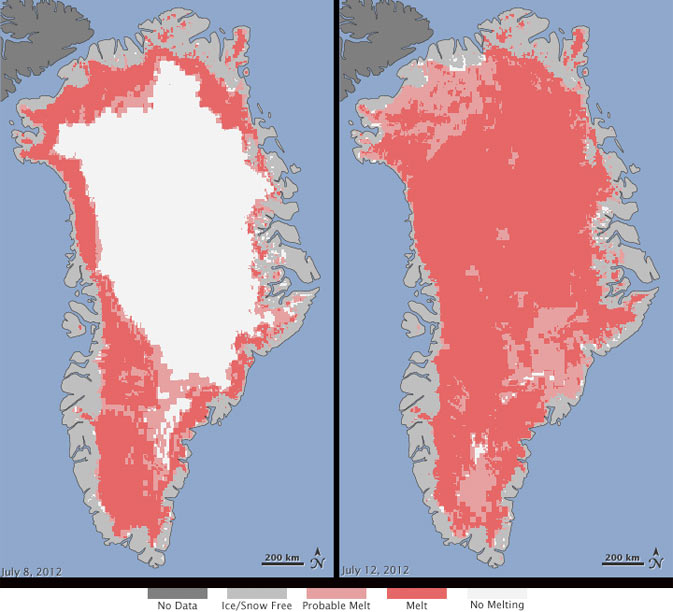
Greenland experienced a significant melting event in 2012
Climate Change
Environmental Science
Geography
3 min read
Updated By: History Editorial Network (HEN)
Published:
Updated:
In 2012, Greenland experienced a significant melting event, marking one of the fastest rates of ice loss in the history of the Greenland ice sheet, which has been monitored for over 12,000 years. This unprecedented event saw nearly the entire surface of the ice sheet melting, with no accumulation of snow or ice to counterbalance the loss. NASA graphics from that year highlighted the extensive reach of the melting, indicating that the ice sheet was responding dramatically to rising global temperatures and increased atmospheric carbon dioxide concentrations.
The implications of this event are profound, as it not only contributes to rising sea levels but also signals a concerning trend that could lead to further melting in the coming decades. Scientists have noted that similar massive melting events occurred again in 2019 and 2021, suggesting a worrying pattern that could exceed previous records later in the century. The 2012 melting event serves as a critical reminder of the urgent need for climate action to mitigate the impacts of climate change on polar ice and global sea levels.
#Mooflife #MomentOfLife #GreenlandMelting #ClimateChange #IceSheet #SeaLevelRise #Nasa
Primary Reference
Summer 2012 brought record-breaking melt to Greenland

Explore the Life Moments of
 AI Twin