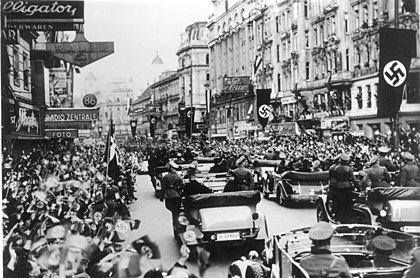
Annexations in Europe: Austria and Sudetenland acquisitions by a neighboring country.
Germany

Political
World War II
3 min read
Updated By: History Editorial Network (HEN)
Published:
Following a period of political instability in Austria and Czechoslovakia, Germany under Nazi leadership set forth on the annexation of Austria and Sudetenland to expand its territory and unite ethnic Germans. The Chancellor of Germany, Adolf Hitler, pursued these territories through political pressure and military threats.
In the annexation of Austria, known as the Anschluss, German troops entered the country to enforce the union with Germany, amidst both support and opposition from the Austrian population. This move violated international agreements and showcased the aggressive expansionist policies of the Third Reich. The annexation of Sudetenland followed a similar pattern, with Hitler demanding the incorporation of areas in Czechoslovakia with a majority German population. The Munich Agreement, signed by Germany, Italy, France, and the UK, allowed the annexation without the use of military force.
These actions heightened tensions in Europe, signaling Hitler's intentions for further expansion and disregard for international agreements. The annexation of Austria and Sudetenland marked a significant step towards the outbreak of World War II.
#Germany #Anschluss #Expansionism #WorldWarII #PoliticalTensions
Primary Reference
Occupation of the Sudetenland – The Holocaust Explained ...

Explore the Life Moments of
 AI Twin