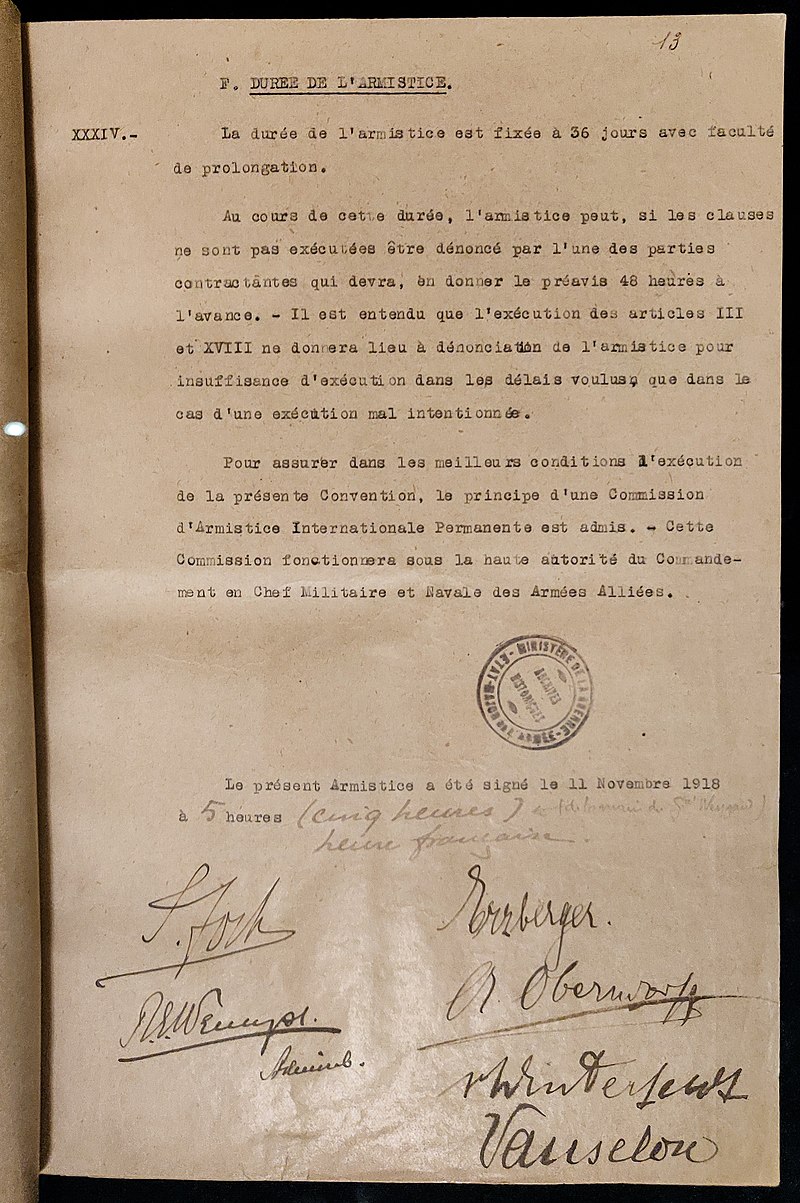
Germany agrees to concessions to secure armistice, marking the war's end.
Germany

Political
Military Conflict
3 min read
Updated By: History Editorial Network (HEN)
Published:
As World War I neared its end, Germany found itself in a precarious position. The intense fighting and devastating losses had taken a toll on the country, pushing its leaders to seek an armistice. Allies demanded Germany's immediate surrender, leading to intense negotiations where Germany had to agree to further concessions.
In the final agreement, Germany accepted strict terms that included the dismantling of its military forces, significant territorial losses, and heavy reparations. This marked a significant turning point for Germany, as it faced a humbling defeat and had to accept responsibility for the war's devastation.
The impact of the end of WWI and Germany's concessions was profound. The country was left in a state of turmoil, struggling to rebuild its economy and reputation on the global stage. The terms of the armistice set the stage for the Treaty of Versailles, which further weakened Germany and laid the groundwork for future conflicts.
This event reshaped the course of history, leading to a new era of international relations and setting the stage for the rise of new powers. Germany's concessions served as a harsh reminder of the consequences of war and the importance of diplomacy in resolving conflicts.
#Germany #WWI #Armistice #Concessions #TreatyofVersailles
Primary Reference
Milestone Documents | National Archives

Explore the Life Moments of
 AI Twin