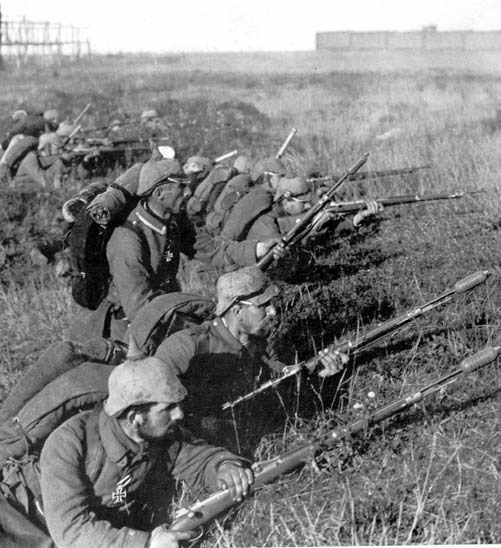
Western armies advance through Belgium met resistance, halted at Battle of the Marne.
Germany
Military
3 min read
Updated By: History Editorial Network (HEN)
Published:
Updated:
During the military campaign, German forces implemented the Schlieffen Plan, crossing neutral Belgium to enter France. As they advanced towards Paris, they were met with strong resistance from the French and British armies. The Battle of the Marne ensued, leading to a crucial confrontation in northern France.
The Battle of the Marne involved intense combat, with both sides suffering heavy casualties. However, the German advancement was halted, and their forces were pushed back. This marked a turning point in the war, as the Allies successfully defended Paris and prevented a quick German victory.
The outcome of the Battle of the Marne had significant implications for the rest of the conflict. It shattered German hopes for a swift victory in the west and led to a prolonged and grueling war of attrition. The battle also solidified the Western Front, where trench warfare would dominate for years to come.
The event highlighted the resilience and determination of the Allied forces in the face of a formidable enemy. It showcased the importance of strategic planning and the ability to adapt to changing circumstances on the battlefield.
#GermanMilitaryCampaign #BattleoftheMarne #AlliedResistance
Primary Reference
Interactive Timeline | National WWI Museum and Memorial

Explore the Life Moments of
 AI Twin