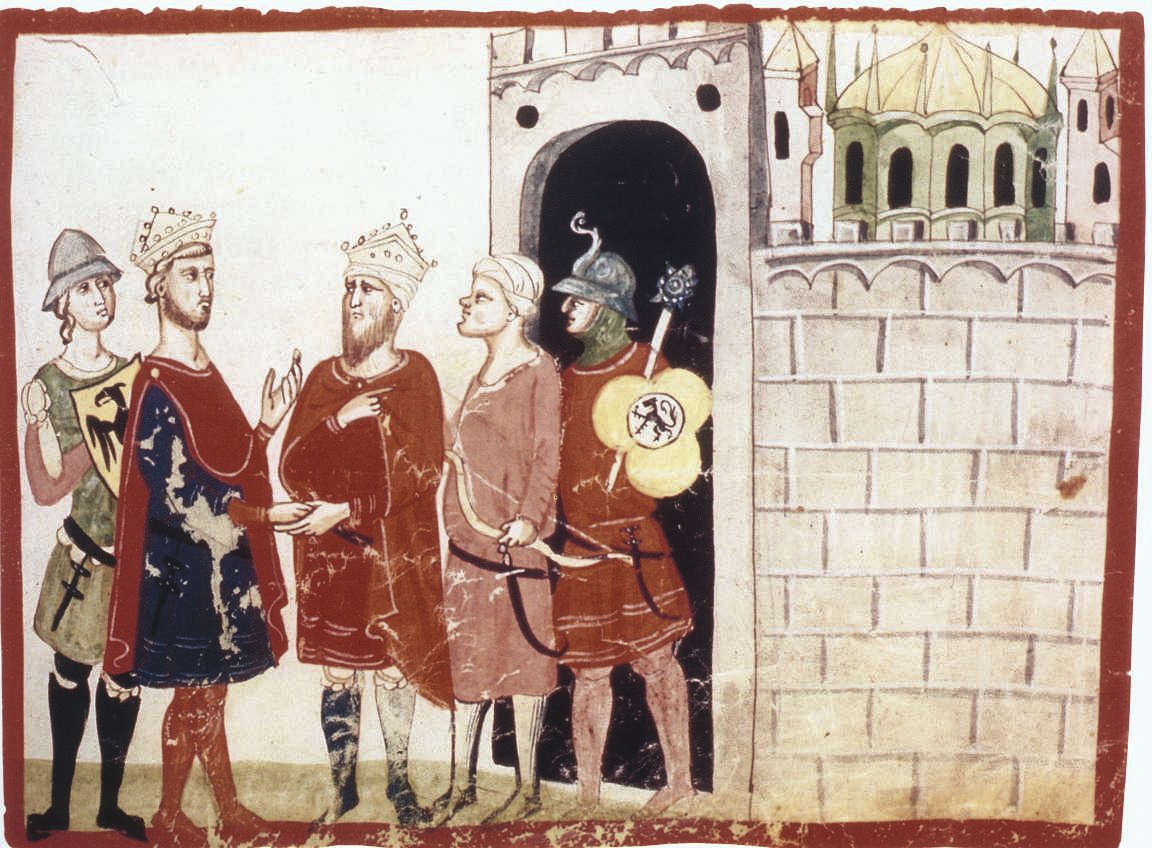
Emperor Frederick II issues Golden Bull establishing King of the Romans election procedures.
Germany
Political
3 min read
Updated By: History Editorial Network (HEN)
Published:
Following years of political unrest and power struggles, Emperor Frederick II issued the Golden Bull of Rimini in the city of Rimini. This important decree outlined specific constitutional procedures for the election of the King of the Romans, effectively establishing a structured system for selecting the future leaders of the Holy Roman Empire.
The Golden Bull of Rimini aimed to streamline the election process and prevent the outbreak of further conflicts among the various German princes vying for the throne. The decree stipulated that seven Electors, composed of the most influential secular and ecclesiastical leaders, would be responsible for electing the King of the Romans. This system provided a degree of stability and predictability to the succession process, reducing the potential for dispute and civil war.
The issuance of the Golden Bull of Rimini marked a significant turning point in the political landscape of the Holy Roman Empire. By codifying the rules for royal succession, Emperor Frederick II sought to consolidate his own power and ensure a more orderly transition of leadership in the future. The impact of this decree reverberated throughout the empire, setting the stage for a more structured and centralized system of government.
#HolyRomanEmpire #EmperorFrederickII #GoldenBullOfRimini #RoyalSuccession
Primary Reference
The North Archives • History of the Germans Podcast

Explore the Life Moments of
 AI Twin