Russian and Allied troops depart Berlin after long occupation, symbolizing the end of wartime presence.
Germany


Political
9 min read
Updated By: History Editorial Network (HEN)
Published:
On September 2, 1994, a significant chapter in European history came to a close as the last Russian and Allied troops formally departed Berlin, symbolizing the end of a nearly five-decade-long military presence in Germany following World War II. This event marked not only the final withdrawal of foreign forces from Berlin but also underscored the full restoration of German sovereignty and the definitive end of the Cold War era.
Background: Post-War Occupation of Berlin
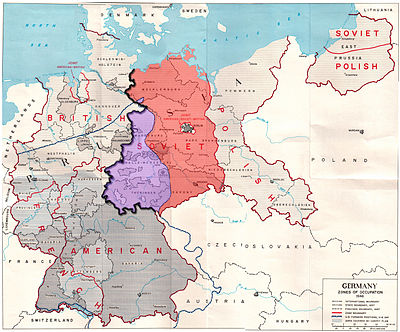
At the end of World War II in 1945, Germany was divided into four occupation zones, controlled by the Allied powers: the United States, the Soviet Union, the United Kingdom, and France. Berlin, the capital, located deep within the Soviet zone, was similarly divided into four sectors. The occupation of Berlin became one of the most symbolic and contentious aspects of the post-war settlement, eventually leading to the division of the city into East Berlin (controlled by the Soviet Union) and West Berlin (controlled by the Western Allies).
The tensions between the Soviet Union and the Western Allies over the governance of Germany and Berlin culminated in the Berlin Blockade of 1948-1949, followed by the construction of the Berlin Wall in 1961, which physically and ideologically divided the city for nearly 30 years. The presence of Allied troops in West Berlin and Soviet troops in East Berlin became a daily reminder of the broader Cold War conflict between East and West.
The Fall of the Berlin Wall and German Reunification
The Berlin Wall fell on November 9, 1989, following a wave of peaceful protests and political changes in East Germany, which were part of the broader collapse of communist regimes across Eastern Europe. The fall of the Wall paved the way for German reunification, which was formally completed on October 3, 1990. As Germany reunited, the presence of foreign troops, particularly those of the Soviet Union, became an issue to be addressed.
The Two Plus Four Agreement, signed in September 1990 by the two German states and the four Allied powers (the United States, the Soviet Union, the United Kingdom, and France), laid the groundwork for the withdrawal of foreign forces and affirmed Germany’s full sovereignty. The agreement stipulated that all Soviet troops would leave Germany by the end of 1994.
The Departure of Russian and Allied Troops
On September 2, 1994, the final ceremonies were held to mark the withdrawal of Russian and Allied troops from Berlin. This moment was deeply symbolic, as it represented the end of the occupation that had begun nearly 50 years earlier and the conclusion of the Allied military presence that had defined much of the Cold War era.
The farewell ceremonies included a large military parade and a formal gathering attended by high-ranking officials from Germany, Russia, the United States, the United Kingdom, and France. Russian President Boris Yeltsin and German Chancellor Helmut Kohl were among the dignitaries present, emphasizing the importance of this moment in the broader context of post-Cold War European relations.
The departure of the troops was not just the physical withdrawal of foreign soldiers; it was also a powerful symbol of the new Europe that had emerged after the Cold War—a Europe in which Germany was once again a fully sovereign state and a key player in the continent’s political and economic future.
Significance and Legacy
The withdrawal of Russian and Allied troops from Berlin on September 2, 1994, marked the end of an era. It was the final act in the long process of Germany’s recovery from the devastation of World War II and its subsequent division during the Cold War. The departure of the troops underscored the end of the division of Europe into East and West and the emergence of a new, unified Germany within a peaceful and cooperative Europe.
For Berliners, the day was a poignant reminder of the city’s turbulent history, but also a moment of pride and optimism as Berlin fully reclaimed its status as the capital of a united Germany.
The legacy of this event is seen in the transformed landscape of Berlin and Germany as a whole. The city has become a vibrant cultural and political center, while Germany has grown into a leading nation in Europe and the world, promoting peace, democracy, and unity.
#Berlin1994 #ColdWarEnd #GermanReunification #PostWWIIHistory #SovietWithdrawal #BerlinHistory #EndOfOccupation #MomentsOfLife #MoofLife_Moment #MoofLife
Primary Reference
Declassified: A short history of NATO - NATO
Explore the Life Moments of
 AI Twin