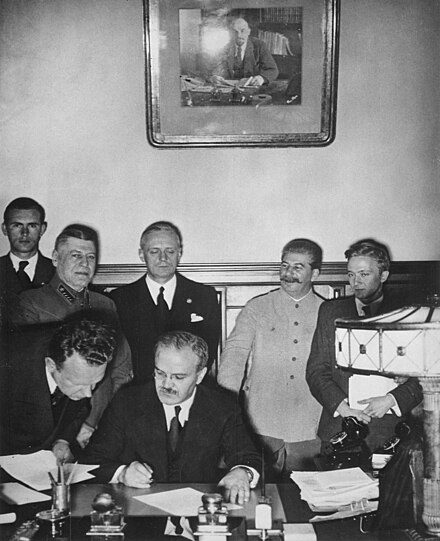
Nazi-Soviet Non-Aggression Pact divides Eastern Europe, solidifies alliance.
Germany
Political
International Relations
3 min read
Updated By: History Editorial Network (HEN)
Published:
During this time, Nazi Germany and the Soviet Union agreed on a non-aggression pact with a secret protocol, which outlined the division of Eastern Europe into spheres of influence. The agreement was surprising to many, given the ideological differences between the two nations, but both countries saw benefits in avoiding conflict and expanding their territories. Germany sought to avoid a two-front war, while the Soviet Union aimed to protect itself from potential aggression.
The impact of this agreement was significant and far-reaching. It allowed Germany to invade Poland without facing immediate Soviet opposition, leading to the outbreak of World War II. Additionally, the secret protocol effectively gave the Soviet Union control over the Baltic states and parts of Eastern Europe. This event marked a turning point in European history, illustrating the realpolitik approach of countries willing to set aside ideological differences for strategic gain.
The non-aggression pact between Nazi Germany and the Soviet Union reshaped the geopolitical landscape of Eastern Europe, setting the stage for a series of events that would ultimately change the course of history. #NaziGermany #SovietUnion #EasternEurope #NonAggressionAgreement #WorldWarII
Primary Reference
German-Soviet Pact | Holocaust Encyclopedia

Explore the Life Moments of
 AI Twin