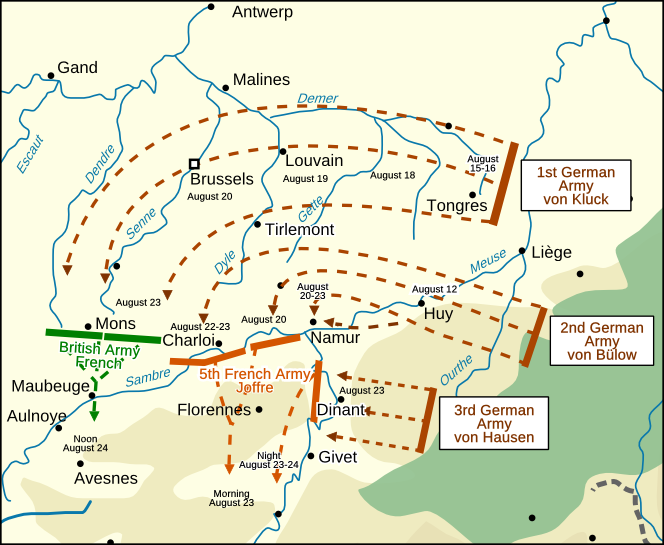
Germany's strategic move to advance through Belgium to reach Paris.
Germany
Political
War
3 min read
Updated By: History Editorial Network (HEN)
Published:
Germany declared war on France and advanced its main armies through Belgium towards Paris, aiming to swiftly capture the city from the north. The invasion plan, known as the Schlieffen Plan, was designed to avoid a two-front war with France and Russia. By violating Belgium's neutrality, Germany sought to outflank the French forces and achieve a quick victory.
The decision to go through Belgium sparked international condemnation and drew Britain into the conflict, as they were committed to defending Belgian neutrality. The rapid German advance through Belgium shocked the Allies and nearly led to the capture of Paris, but the French resistance and the famous Battle of the Marne halted the German offensive.
The event marked a crucial turning point in the early stages of World War I, shifting the focus from a localized conflict to a broader European war. The violation of Belgian neutrality and the aggressive German tactics contributed to shaping the narrative of the war and influencing public opinion in favor of the Allied powers.
#Germany #France #Belgium #WorldWarI #Invasion #ParisCapture #SchlieffenPlan #BattleoftheMarne
Primary Reference
Declassified: A short history of NATO - NATO

Explore the Life Moments of
 AI Twin