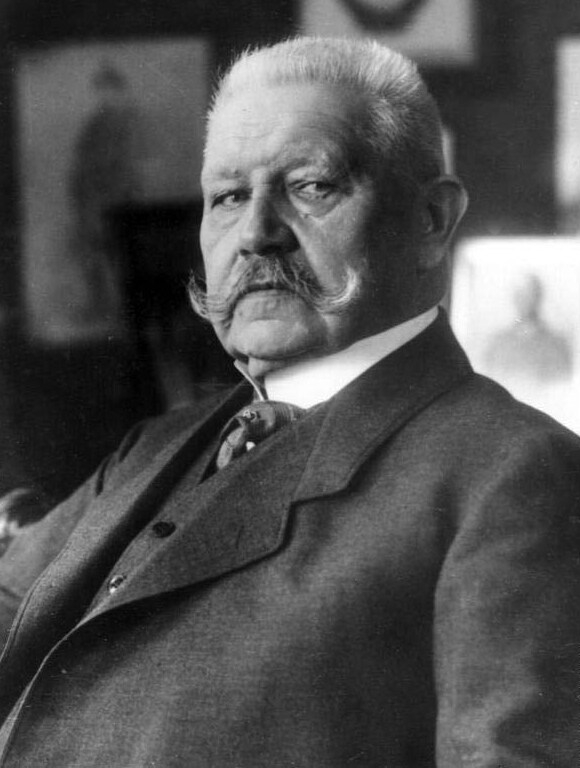
General von Hindenburg and General Ludendorff defeat Russian armies in Battle of Tannenberg.
Germany
Military
10 min read
Updated By: History Editorial Network (HEN)
Published:
The events from August 17 to August 22, 1914, set the stage for the pivotal Battle of Tannenberg during World War I. This prelude captures the early maneuvers and critical decisions that led to one of the most decisive engagements on the Eastern Front between the German and Russian Empires.
The Russian Advance Begins
On August 17, 1914, the Russian First Army, commanded by General Pavel Rennenkampf, began its advance into East Prussia. This movement caught the Germans off guard, as they underestimated the speed and preparedness of the Russian forces. Contrary to German expectations, the Russian mobilization had started earlier, on July 25, instead of the widely believed date of July 30. The First Army crossed the border, moving westward, setting the stage for the initial clashes between the two great powers.
As Rennenkampf's troops pushed into East Prussia, the German Eighth Army, led by General Maximilian von Prittwitz, prepared to counter the invasion. The Germans were spread thin across the region, and their strategy involved taking advantage of their interior lines to quickly concentrate forces against the advancing Russians.
The Battle of Gumbinnen: A Fateful Encounter
On August 20, the German Eighth Army initiated a preemptive strike against Rennenkampf's forces near Gumbinnen. Prittwitz, hoping to catch the Russians off guard, ordered an attack involving three German corps. General Hermann von François's I Corps struck first, launching a surprise dawn assault on the Russian XX Corps. Initially, the German forces achieved some success, with François's men inflicting heavy casualties on the Russians. However, as the day wore on, the Russians, though low on ammunition, managed to mount a stiff resistance.
The Russian artillery, in particular, proved devastating, halting the German advance and inflicting significant losses. The German assault faltered as fatigue and the intense summer heat took their toll on the troops. By the afternoon, the Russian forces had regrouped and launched a counterattack that sent Mackensen's XVII Corps into disarray. The German lines buckled, and Prittwitz, fearing a complete rout, ordered a general retreat.
Prittwitz's Dilemma and the German Response
The retreat from Gumbinnen threw the German high command into panic. Prittwitz, recognizing the danger of being outflanked by the advancing Russian Second Army under General Alexander Samsonov, considered withdrawing the Eighth Army to the Vistula River, effectively abandoning East Prussia. This prospect alarmed the German leadership in Berlin, as it threatened to expose the heart of Germany to Russian invasion.
Prittwitz's indecision and the chaotic situation on the ground prompted the German high command, under the direction of Field Marshal Helmuth von Moltke the Younger, to take drastic action. On August 21, Moltke made the critical decision to relieve Prittwitz and his chief of staff, Alfred von Waldersee, of their duties. In their place, Moltke appointed General Paul von Hindenburg, a retired veteran, as the new commander of the Eighth Army, with Major General Erich Ludendorff as his chief of staff. The duo, who would become central figures in the German war effort, were tasked with stabilizing the situation and countering the Russian advance.
The Stage is Set for Tannenberg
By August 22, Hindenburg and Ludendorff were on their way to take command, and the German Eighth Army began repositioning its forces to face the imminent threat from Samsonov's Second Army. The German I Corps, under François, was ordered to relocate by rail to reinforce the XX Corps, which was facing Samsonov's main thrust. Meanwhile, Rennenkampf's First Army, believing the Germans were in full retreat, paused its advance, losing contact with the German forces. This pause proved critical, as it gave Hindenburg and Ludendorff the time they needed to execute their plans.
The Russians, though advancing, were plagued by logistical issues. Their supply lines were stretched, and communication between the First and Second Armies was poor. These difficulties would soon contribute to the catastrophic Russian defeat at Tannenberg.
Prelude to a Decisive Battle
The events of August 17–22, 1914, thus set the stage for the Battle of Tannenberg, a battle that would see the German forces, under their new command, decisively defeat Samsonov's Second Army. The maneuvering, the decisions made, and the initial clashes during this prelude were critical in shaping the outcome of the battle, which would not only crush the Russian advance into East Prussia but also elevate Hindenburg and Ludendorff to the status of national heroes in Germany.
This prelude is a testament to the chaos and uncertainty of early World War I, where rapid decisions and the fog of war could dramatically alter the course of history within days.
#BattleOfTannenberg #WorldWarI #EasternFront #GermanArmy #RussianArmy #MomentsOfLife #MoofLife_Moment #MoofLife
Primary Reference
Germany - WWI, Treaty, Versailles | Britannica

Explore the Life Moments of
 AI Twin