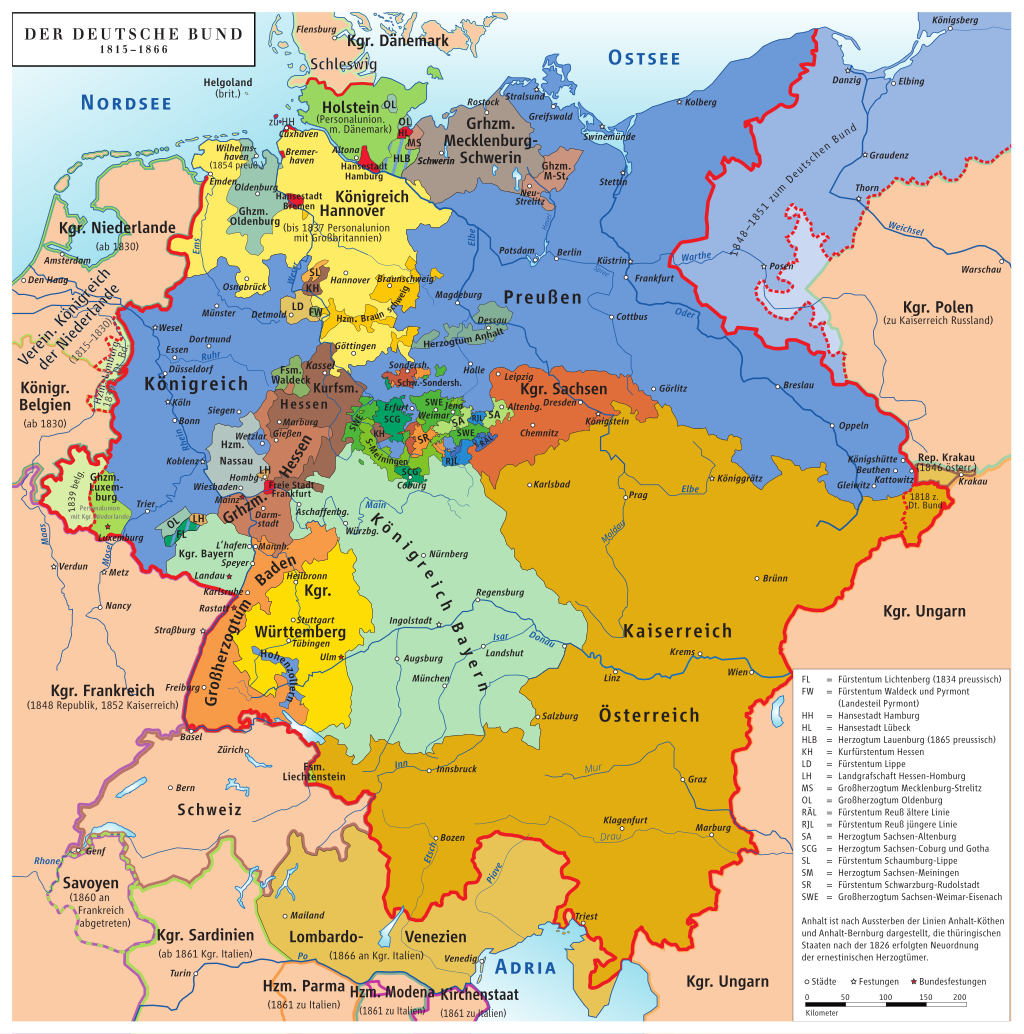
Formation of Confederation: Rise of unified states from Napoleonic era disruptions led empowerment.
Germany

Political
European
3 min read
Updated By: History Editorial Network (HEN)
Published:
Updated:
Following the defeat of Napoleon Bonaparte at the Battle of Waterloo, the German Confederation was formed by the Congress of Vienna in an attempt to establish a stable political order in Central Europe. Comprising of 39 German states, the confederation aimed to maintain the balance of power and prevent further French expansion. It emphasized principles of mutual defense and cooperation among member states while preserving their individual sovereignty.
The Confederation was led by Austria and Prussia, the two dominant German-speaking powers, in a system characterized by a federal diet and a federal assembly. Despite its efforts to promote unity, the Confederation faced challenges due to differing interests and rivalries among its members. It also laid the groundwork for the eventual unification of Germany under Prussian leadership in 1871.
The formation of the German Confederation marked a significant step towards the reorganization of Europe after the Napoleonic Wars, shaping the political landscape of the region for years to come. It set the stage for the rise of nationalism and the eventual emergence of a unified German state. The legacy of the Confederation continues to influence Germany's federal structure and diplomatic relations in the modern era.
#GermanConfederation #CongressOfVienna #EuropeanHistory #PoliticalUnity
Primary Reference
German Confederation - Wikipedia

Explore the Life Moments of
 AI Twin