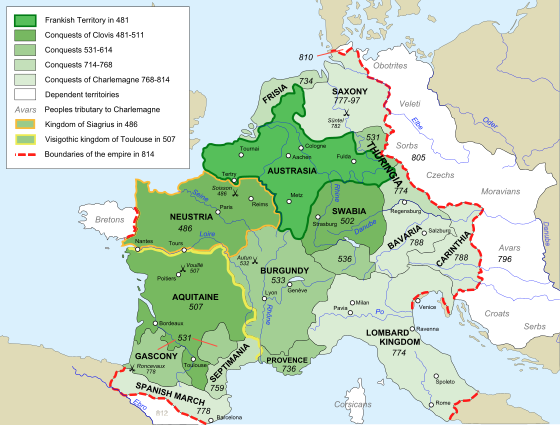
Treaty splits Carolingian Empire into three separate kingdoms in historic agreement.
Germany

Political
European
3 min read
Updated By: History Editorial Network (HEN)
Published:
In 843, the Treaty of Verdun was signed, leading to the division of the Carolingian Empire into three kingdoms. The background of this event lies in the power struggles between the grandsons of Charlemagne – Charles the Bald, Louis the German, and Lothair I. The treaty aimed to put an end to the conflicts over the empire by establishing distinct territories for each ruler.
The impact of the Treaty of Verdun was profound, as it marked the beginning of the separate development of the territories that would eventually evolve into France, Germany, and Lotharingia (a region covering parts of modern-day Netherlands, Belgium, and Italy). This division laid the groundwork for the future nations of Europe and had lasting consequences for the political landscape of the continent.
The division of the Carolingian Empire into three kingdoms altered the course of history, shaping the identities and borders of modern-day European countries. The Treaty of Verdun symbolizes a pivotal moment in the feudal era, highlighting the shift towards decentralized power and the emergence of distinct nation-states.
#TreatyofVerdun #CarolingianEmpire #EuropeanHistory #DivisionOfKingdoms #FeudalEra #NationStates
Primary Reference
Lothair I OF ITALY
Explore the Life Moments of
 AI Twin