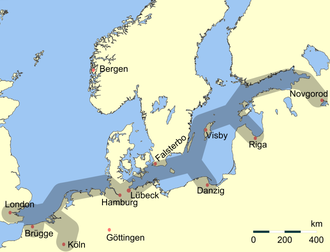
Establishment of the Hanseatic League, a medieval trade alliance promoting economic cooperation among cities.
Germany

Economic Political
3 min read
Updated By: History Editorial Network (HEN)
Published:
In 1358, the Hanseatic League was established in Germany, marking a pivotal moment in the region's economic history. The league was formed by merchant communities along the North and Baltic Seas to protect their trading interests and ensure safe and efficient commerce routes.
The Hanseatic League quickly grew in influence, establishing a network of alliances and trade agreements across Northern Europe. Its member cities, known as Hansa, benefited from shared protection, increased market access, and reduced trade barriers. This led to flourishing trade, economic growth, and cultural exchange within the region.
The league's impact extended beyond commerce, influencing political dynamics and shaping urban development in member cities. It played a crucial role in maintaining peace and stability in the region, resolving conflicts diplomatically, and even engaging in military actions when necessary.
The Hanseatic League's legacy can still be seen in the architectural landmarks, trade routes, and cultural ties that connect Hanseatic cities to this day. Its emphasis on cooperation, mutual benefit, and safeguarding of trade interests laid the foundation for modern-day economic alliances and international relations.
#HanseaticLeague #GermanHistory #TradeAlliance
Primary Reference
Hanseatic League - Wikipedia

Explore the Life Moments of
 AI Twin