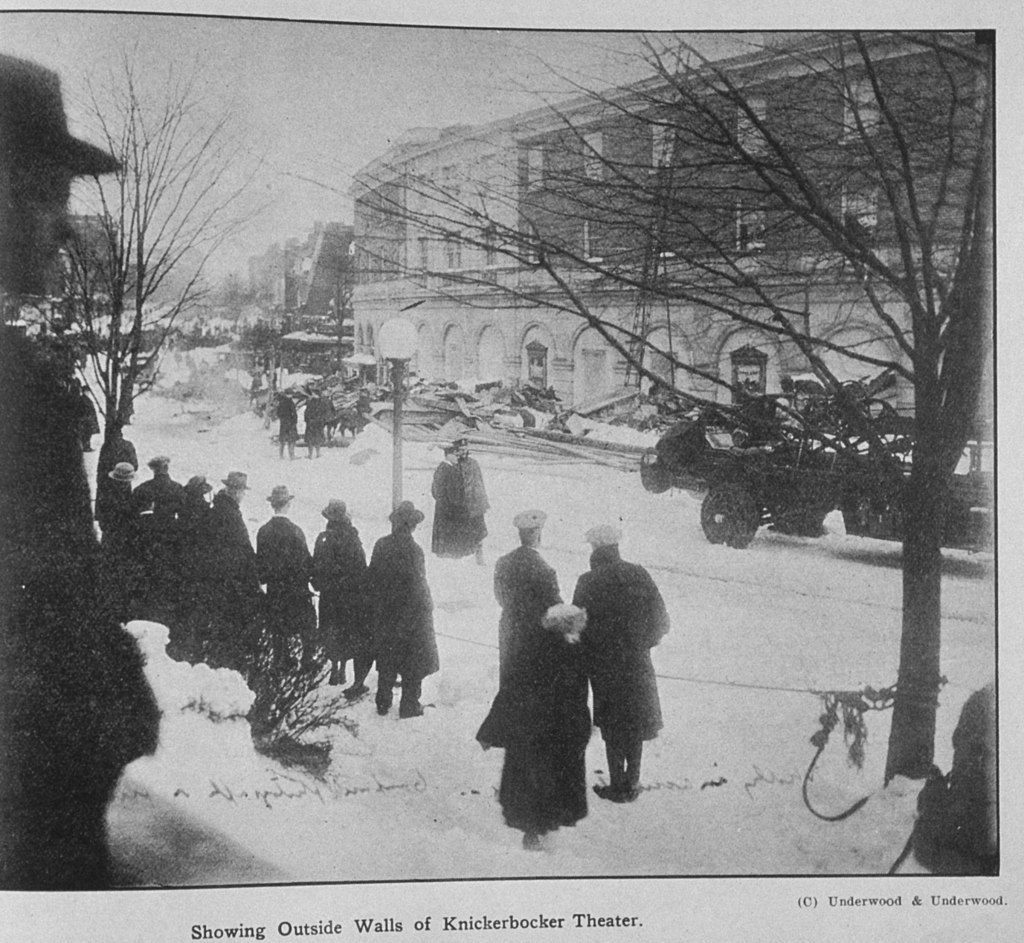
Rescue Efforts Following the Destruction of Knickerbocker Theatre During January 1922 Blizzard
Washington, D.C., United States
Rescue Operations
Theatre
3 min read
Updated By: History Editorial Network (HEN)
Published:
Updated:
On 28/01/1922, Major George S. Patton Jr. led U.S. Army troops in rescue and recovery operations following the collapse of the Knickerbocker Theatre in Washington, D.C. The theater’s roof gave way during a severe snowstorm, after heavy snowfall accumulated on the structure. The collapse occurred in the evening while a film audience was inside, trapping hundreds of people beneath debris. Contemporary reports recorded 98 fatalities and more than 130 injuries, making it one of the deadliest disasters in Washington, D.C. history.
Patton, then serving with the 3rd Cavalry Regiment at Fort Myer, Virginia, quickly mobilized soldiers and moved them across the Potomac River to assist civil authorities. Under harsh winter conditions, troops worked through the night clearing wreckage, searching for survivors, and transporting injured victims to hospitals. Patton personally directed soldiers at the site, coordinating manpower and helping organize the removal of debris. Army personnel joined firefighters, police officers, and civilian volunteers in a sustained effort that continued into the following day as rescue operations transitioned into recovery.
The Knickerbocker Theatre disaster prompted investigations into building standards and snow load safety in Washington, D.C. The Army’s rapid response, including Patton’s leadership of cavalry troops from Fort Myer, became a documented example of military assistance to civil authorities during a domestic emergency in the early 1920s.
#mooflife
#MomentOfLife
#GeorgeS.Patton
#KnickerbockerTheatre
#1922Blizzard
#WashingtonD.c.
#RescueOperations
Primary Reference
Knickerbocker Theatre (Washington, D.C.)

Explore the Life Moments of
 AI Twin