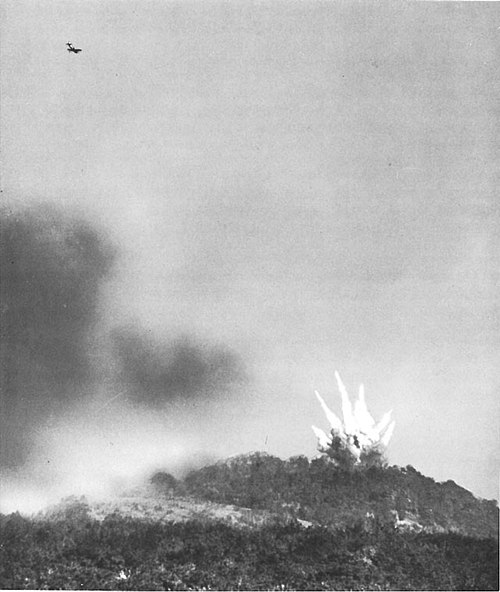
Patton's Attempt to Capture Fort Driant Near Metz Results in Defeat
Moselle River near Metz, France
Military History
World War II
Battles
4 min read
Updated By: History Editorial Network (HEN)
Published:
Updated:
On 05/09/1944, General George S. Patton’s U.S. Third Army reached the Moselle River in the vicinity of Metz, France, marking the end of its rapid advance across northern France following the breakout from Normandy in August 1944. After sweeping eastward across the Seine and through the Champagne region, Third Army units approached the heavily fortified Metz area, where German forces began organizing defensive positions anchored on the Moselle River and the surrounding fortifications.
By early September, elements of the XX Corps moved toward crossings south and west of Metz, probing German defenses and attempting to establish bridgeheads. However, the rapid advance began to slow due to logistical constraints, including fuel shortages and extended supply lines stretching back to Normandy. These limitations reduced operational momentum just as Third Army encountered prepared defensive terrain around Metz, which included forts originally constructed in the late nineteenth and early twentieth centuries and later integrated into German defensive planning.
The arrival at the Moselle on 05 September marked a transition from mobile pursuit operations to positional fighting in the Lorraine region. Over the following weeks, Third Army forces attempted crossings of the Moselle and engagements around Metz, leading to prolonged combat through September, October, and November 1944. The city of Metz and its surrounding defenses were eventually secured by U.S. forces in late November 1944 after sustained operations.
#mooflife
#MomentOfLife
#Patton'sThirdArmy
#Eisenhower
#MoselleRiver
#Metz
#FrenchRailNetwork
#LogisticalRecovery
#AlliedForces
#EasternFrance
#MilitaryStrategy
Primary Reference
Battle of Nancy 75th Anniversary Commemoration at the WWII Memorial

Explore the Life Moments of
 AI Twin