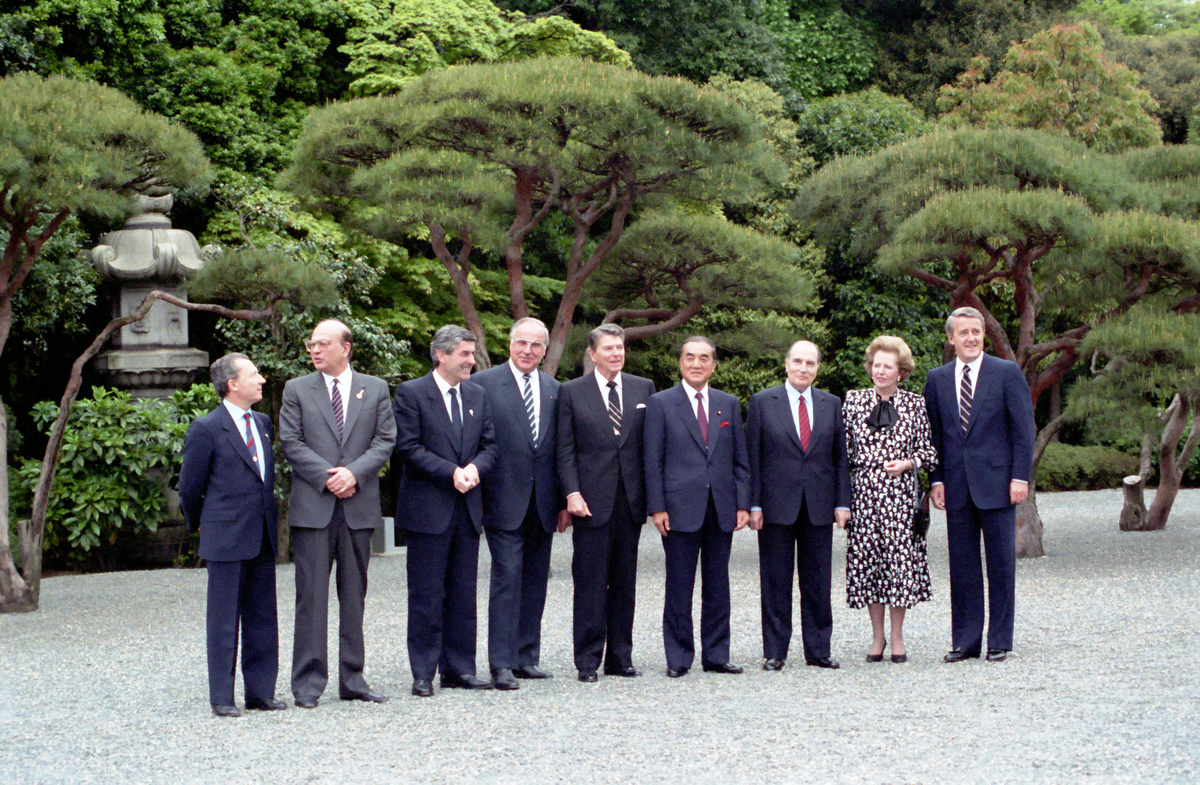
1986 G7 summit Minato, Tokyo
東京都, 日本
International Relations
Economic Policy
Global Governance
4 min read
Updated By: History Editorial Network (HEN)
Published:
The 12th G7 summit took place in Minato, Tokyo, hosted by Japan under the leadership of Prime Minister Yasuhiro Nakasone. This summit was part of the ongoing annual meetings among the major industrial democracies, aimed at coordinating policies on various global issues including the economy, trade, energy, development, security, and international crisis management. The Akasaka Palace served as the venue for this significant gathering, which brought together leaders from the world's largest economies to discuss pressing matters affecting their nations and the global community. The G7 summits are crucial for fostering dialogue and collaboration among these nations, allowing them to address challenges collectively and formulate strategies that can lead to more stable international relations.
The impact of the G7 summit extends beyond the immediate discussions held during the event. These summits have historically played a vital role in shaping global economic policies and responses to crises. By providing a platform for leaders to engage in direct dialogue, the G7 facilitates consensus-building on critical issues. The outcomes of these meetings often influence international economic policies and can lead to coordinated actions that address global challenges. The 1986 summit, like its predecessors, contributed to the ongoing process of collaboration among industrialized nations, reinforcing the importance of multilateralism in addressing complex global issues. The discussions held at such summits are instrumental in setting the agenda for future international cooperation and policy-making.
#mooflife
#MomentOfLife
#G7Summit
#Tokyo
#YasuhiroNakasone
#GlobalEconomy
#InternationalRelations

Explore the Life Moments of
 AI Twin