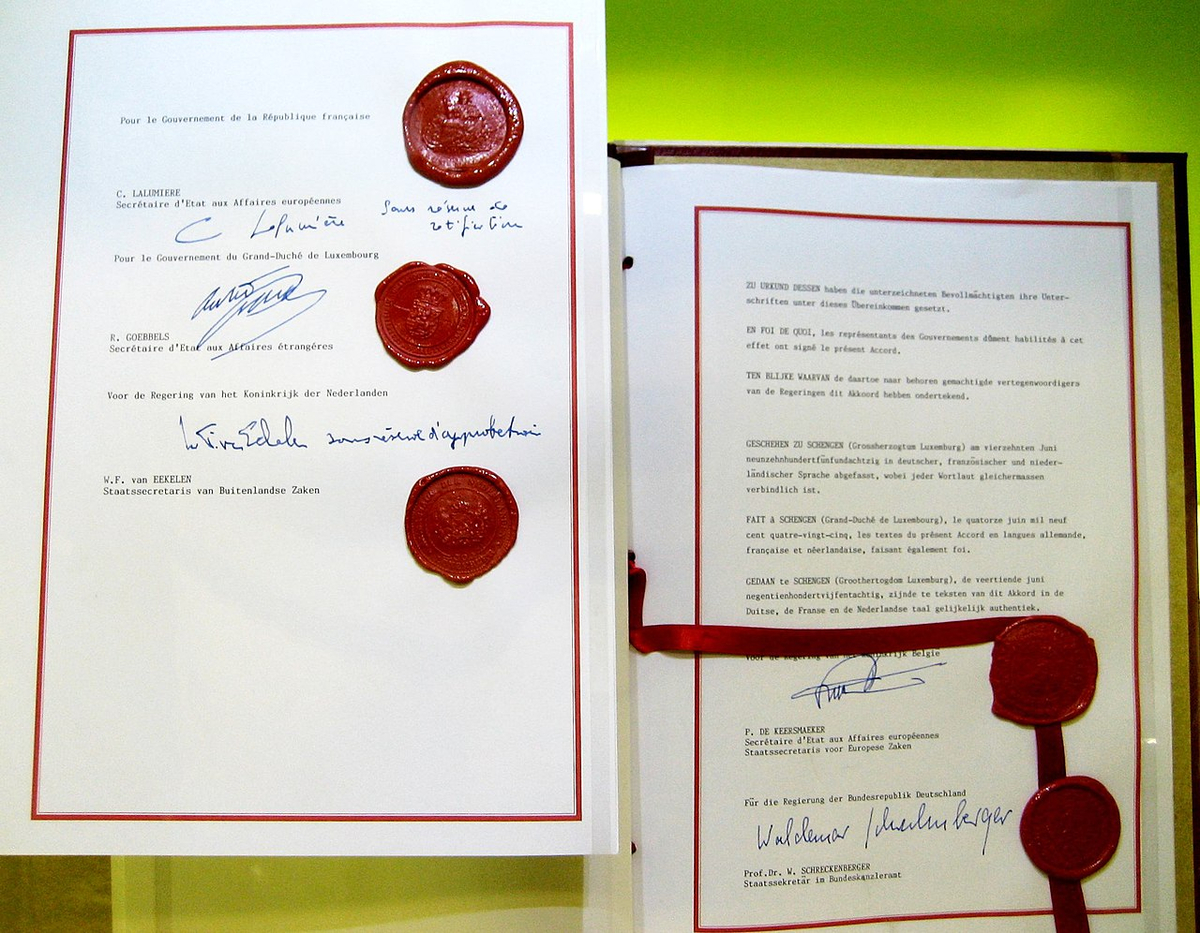
Schengen Agreement Overview and Significance
Brussels, Belgium

Political
Global Trade
Open Borders
3 min read
Updated By: History Editorial Network (HEN)
Published:
The Schengen Agreement was a pivotal step in the history of European integration. It led to the creation of the Schengen Area, a zone where internal border controls were abolished, allowing for passport-free travel between participating countries. The agreement was signed by several European countries, promoting freedom of movement and enhancing cooperation on security issues. This agreement marked a significant milestone in the establishment of a unified Europe and further strengthened the bonds between participating nations.
The impact of the Schengen Agreement was immense, facilitating seamless travel for millions of people and boosting economic growth through increased trade and tourism. It also symbolized a commitment to shared values and mutual trust among the participating countries. The Schengen Area has since expanded to include a large number of European countries, showcasing the success and relevance of the agreement in promoting unity and collaboration.
The Schengen Agreement remains a cornerstone of European integration, embodying the principles of solidarity and cooperation among nations. It serves as a testament to the enduring spirit of unity and partnership within the European Union. #SchengenAgreement #EuropeanIntegration #FreedomOfMovement

Explore the Life Moments of
 AI Twin