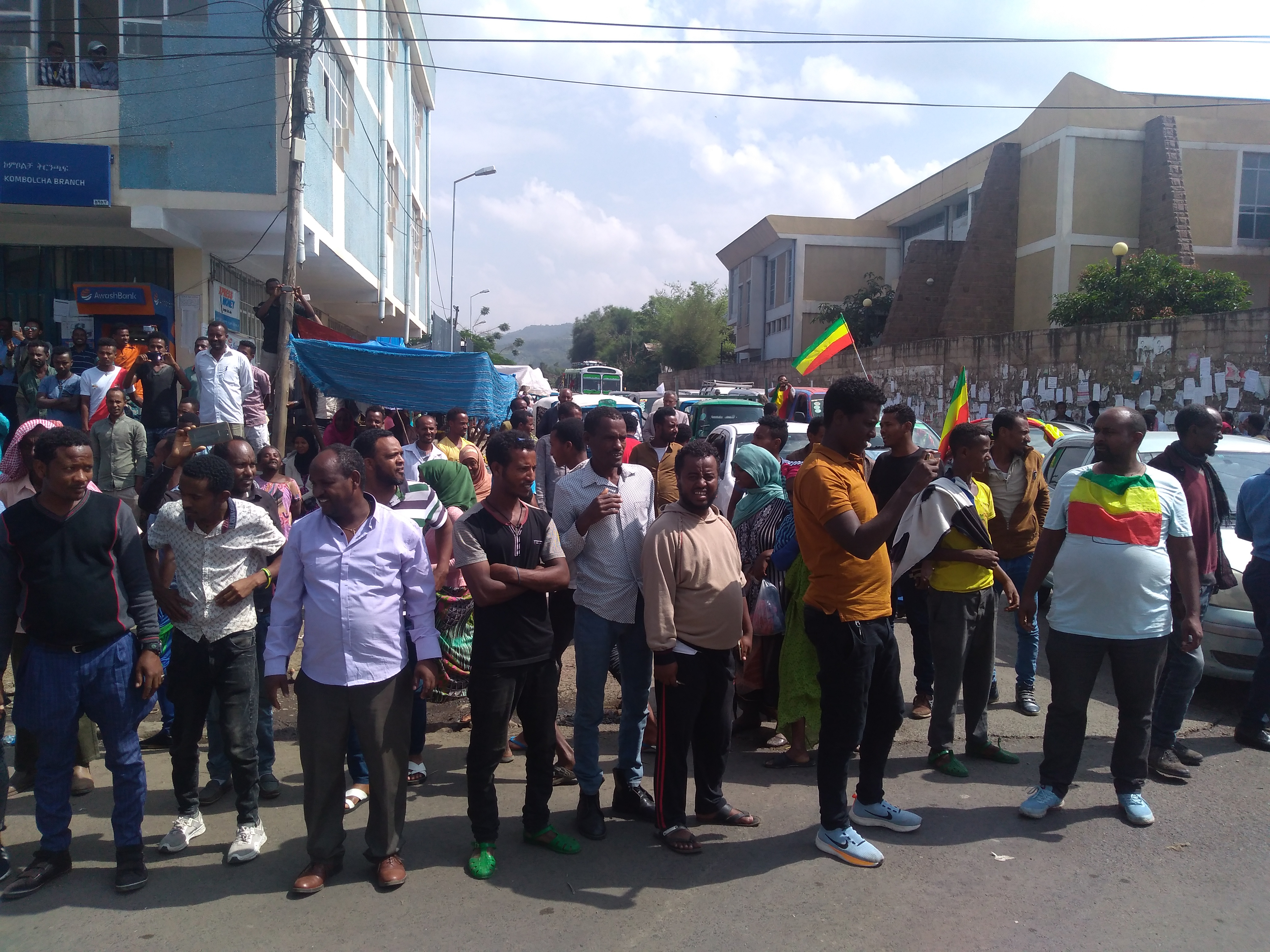
Liberation of political detainees in Ethiopia.
Ethiopia
Political
Human Rights
10 min read
Updated By: History Editorial Network (HEN)
Published:
On June 1, 2018, Ethiopia took a significant step toward political reform and national reconciliation with the liberation of political detainees. This event was part of a broader reform agenda initiated by Prime Minister Abiy Ahmed, who had taken office just two months earlier, in April 2018. The release of these prisoners marked a pivotal moment in Ethiopia's journey toward democratization and human rights improvement.
Background
Ethiopia, one of Africa's most populous countries, had been under the rule of the Ethiopian People's Revolutionary Democratic Front (EPRDF) since 1991. Over the years, the EPRDF's government was criticized for its authoritarian tendencies, including the suppression of political opposition, media censorship, and widespread human rights abuses. Political tensions and ethnic conflicts frequently led to mass protests, particularly from 2015 to 2018, which saw significant unrest and demands for political freedom and justice.
Abiy Ahmed’s Rise to Power
In February 2018, Hailemariam Desalegn resigned as Prime Minister amid increasing unrest, leading to a power vacuum and an internal struggle within the EPRDF. Abiy Ahmed, a former military officer and intelligence chief, emerged as a compromise candidate. His appointment as Prime Minister in April 2018 was groundbreaking, as he became the first Oromo leader to hold the position, representing the largest ethnic group in Ethiopia.
The Decision to Release Political Prisoners
Upon assuming office, Abiy Ahmed pledged to implement sweeping political reforms to address grievances and foster national unity. One of his first major actions was to order the release of thousands of political prisoners. This move was aimed at signaling a break from the repressive policies of his predecessors and creating an environment conducive to dialogue and reconciliation.
The decision to release political detainees on June 1, 2018, was a part of this broader initiative. Many of these prisoners were prominent opposition figures, journalists, activists, and ordinary citizens who had been imprisoned for their political beliefs, participation in protests, or criticism of the government.
Key Figures and Groups Released
Among those released were members of opposition parties such as the Oromo Federalist Congress and the Ginbot 7 movement, journalists like Eskinder Nega, and various activists who had been vocal critics of the government. The release included individuals detained under the country's anti-terrorism laws, which had been widely criticized as tools for silencing dissent.
Impacts and Reactions
The liberation of political detainees was met with widespread acclaim both domestically and internationally. It was seen as a crucial step toward healing the nation's deep political and ethnic divides. Families of the detainees and human rights organizations celebrated the move, viewing it as a long-overdue act of justice.
Internationally, Ethiopia's allies and human rights organizations praised Abiy Ahmed's government for taking concrete steps to improve human rights and democratic governance. The releases were part of a series of reforms that also included lifting the state of emergency, opening up the media landscape, and inviting exiled opposition groups to return to Ethiopia.
Challenges and Ongoing Reforms
Despite the positive reception, the release of political detainees was only the beginning of Ethiopia's complex journey toward democracy. The country faced numerous challenges, including managing ethnic tensions, addressing demands for regional autonomy, and ensuring that the political reforms were institutionalized.
Abiy Ahmed's government continued to navigate these challenges while pushing forward with its reform agenda. This included economic reforms, efforts to liberalize the state-controlled economy, and initiatives to strengthen the rule of law and judicial independence.
Legacy
The liberation of political detainees on June 1, 2018, stands as a landmark moment in Ethiopia's recent history. It underscored a dramatic shift in the country's political landscape and symbolized hope for a more inclusive and democratic future. The event also contributed to Abiy Ahmed being awarded the Nobel Peace Prize in 2019, in recognition of his efforts to foster peace and reconciliation both within Ethiopia and with neighboring Eritrea.
#MomentsOfLife #MoofLife_Moment #MoofLife #Ethiopia #PoliticalReform #HumanRights #AbiyAhmed #EthiopianPolitics #Democratization #Reconciliation #PoliticalPrisoners

Explore the Life Moments of
 AI Twin