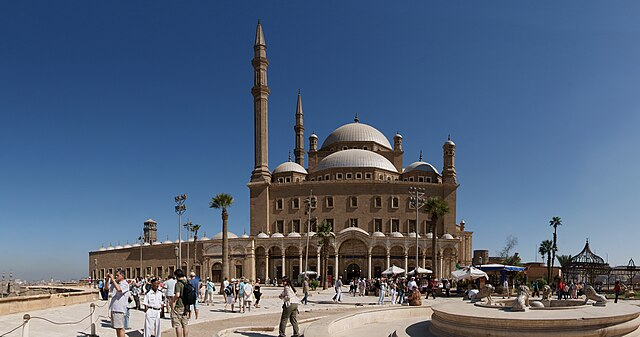
Iconic Mosque in Cairo Citadel
Egypt
Cultural
4 min read
Updated By: History Editorial Network (HEN)
Published:
The construction of the Mosque of Muhammad Ali within the Citadel of Cairo marked a crucial development in Egypt's architectural and cultural history. Commissioned by Muhammad Ali Pasha, the Ottoman governor of Egypt, the mosque was built in the Ottoman architectural style between 1830 and 1848. Designed by the Greek architect Yusuf Bushnak, the mosque stands as a symbol of the cultural and religious dynamism of the era, showcasing a blend of Ottoman and Mamluk architectural elements.
The impact of the construction of the Mosque of Muhammad Ali within the Citadel of Cairo was significant, both architecturally and socially. The prominent location of the mosque within the Citadel, overlooking the city of Cairo, emphasized the political and religious power of Muhammad Ali Pasha. The mosque's grand dome and towering minarets have made it a recognizable feature of Cairo's skyline. Moreover, the mosque's central location and intricate design have drawn visitors and worshippers from around the world, contributing to the cultural and economic vitality of the city.
Today, the Mosque of Muhammad Ali within the Citadel of Cairo continues to serve as an active religious site and a major tourist attraction, embodying the rich historical and architectural heritage of Egypt. Visitors can explore the mosque's stunning interior adorned with intricate decorations and marvel at the panoramic views of Cairo from its elevated position. The construction of this iconic mosque underscores the enduring legacy of Muhammad Ali Pasha and his contributions to Egypt's cultural landscape. #MosqueOfMuhammadAli #CitadelOfCairo #ArchitecturalHeritage
Primary Reference
Muhammad Ali Mosque - Wikipedia

Explore the Life Moments of
 AI Twin