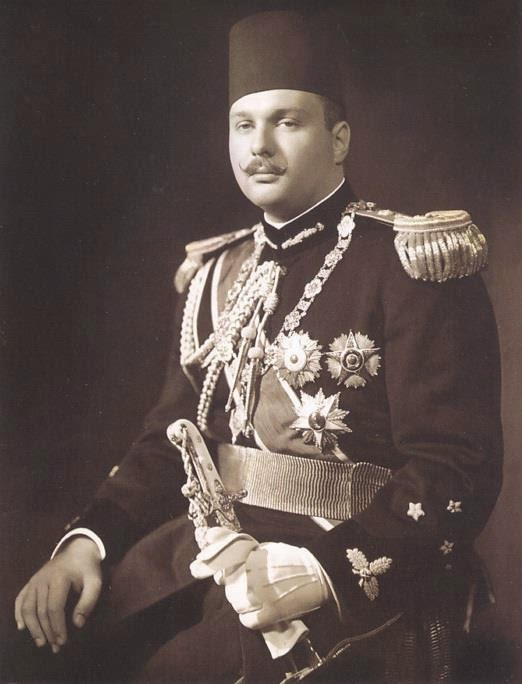
Farouk I becomes King of Egypt following the death of his father
Egypt
Political
Monarchy
9 min read
Updated By: History Editorial Network (HEN)
Published:
On April 28, 1936, Farouk I ascended to the throne of Egypt following the death of his father, King Fuad I. This moment marked the beginning of Farouk's reign over Egypt, a period characterized by significant political, social, and economic changes, as well as considerable turmoil.
Background
King Fuad I had established the modern Kingdom of Egypt in 1922, following the declaration of independence from British protectorate status. Despite this formal independence, British influence remained strong in Egypt, particularly over its military and economic affairs. Fuad I's reign had been marked by efforts to consolidate power and modernize the country, but his sudden death in 1936 brought his son, Farouk, to the throne at the young age of sixteen.
Farouk's Ascension
Farouk I's ascension to the throne was met with both hope and skepticism. As a young and inexperienced ruler, Farouk represented a new generation with the potential to lead Egypt into a modern era. However, his youth and lack of political experience also raised concerns about his ability to navigate the complex and often contentious political landscape of Egypt.
To address his inexperience, a Regency Council was established to govern on his behalf until he reached the age of majority. This council included members of the royal family and senior government officials who were tasked with guiding the young king and ensuring stability during the transitional period.
Early Reign
Farouk's early years on the throne were marked by a mixture of public enthusiasm and political maneuvering. Educated in Europe, he brought with him a modern outlook and a desire to connect with his subjects. He made efforts to appeal to the Egyptian people by adopting a more visible and approachable persona, often appearing in public and participating in national events.
Despite these efforts, Farouk's reign was soon overshadowed by growing political instability. The nationalist Wafd Party, which had been a dominant force in Egyptian politics since the 1920s, continued to push for greater independence from British influence and more significant democratic reforms. Tensions between the monarchy, the Wafd, and the British authorities often led to political gridlock and unrest.
Challenges and Controversies
Farouk's reign was plagued by a series of challenges and controversies. His extravagant lifestyle and alleged personal scandals increasingly alienated many Egyptians, who were struggling with economic hardships and political disenfranchisement. Corruption within the royal court and government further eroded public trust.
Internationally, Farouk's attempts to assert Egypt's sovereignty were met with mixed results. World War II placed Egypt in a strategic position, and despite its declared neutrality, the country became a crucial theater for Allied operations. Farouk's complicated relationship with the British and his perceived lack of effective leadership during this period contributed to his declining popularity.
Decline and Abdication
The post-war period saw a resurgence of nationalist sentiments and increasing demands for social and political reforms. Farouk's inability to effectively address these demands, coupled with his perceived detachment from the realities facing ordinary Egyptians, led to growing discontent. By the early 1950s, his position had become untenable.
The Free Officers Movement, a group of nationalist military officers led by General Muhammad Naguib and Lieutenant Colonel Gamal Abdel Nasser, orchestrated a coup on July 23, 1952. The revolution forced Farouk to abdicate in favor of his infant son, Fuad II, and he went into exile. The monarchy was abolished the following year, and Egypt was declared a republic, marking the end of Farouk's reign and the beginning of a new era in Egyptian history.
#MomentsOfLife #MoofLife_Moment #MoofLife #FaroukI #EgyptianHistory #MonarchyToRepublic #1936 #MiddleEasternHistory #PoliticalChange #ModernEgypt

Explore the Life Moments of
 AI Twin