Government Shutdown Ends with Funding for Border Wall
President's Moment
Political
4 min read
Updated By: History Editorial Network (HEN)
Published:
Updated:
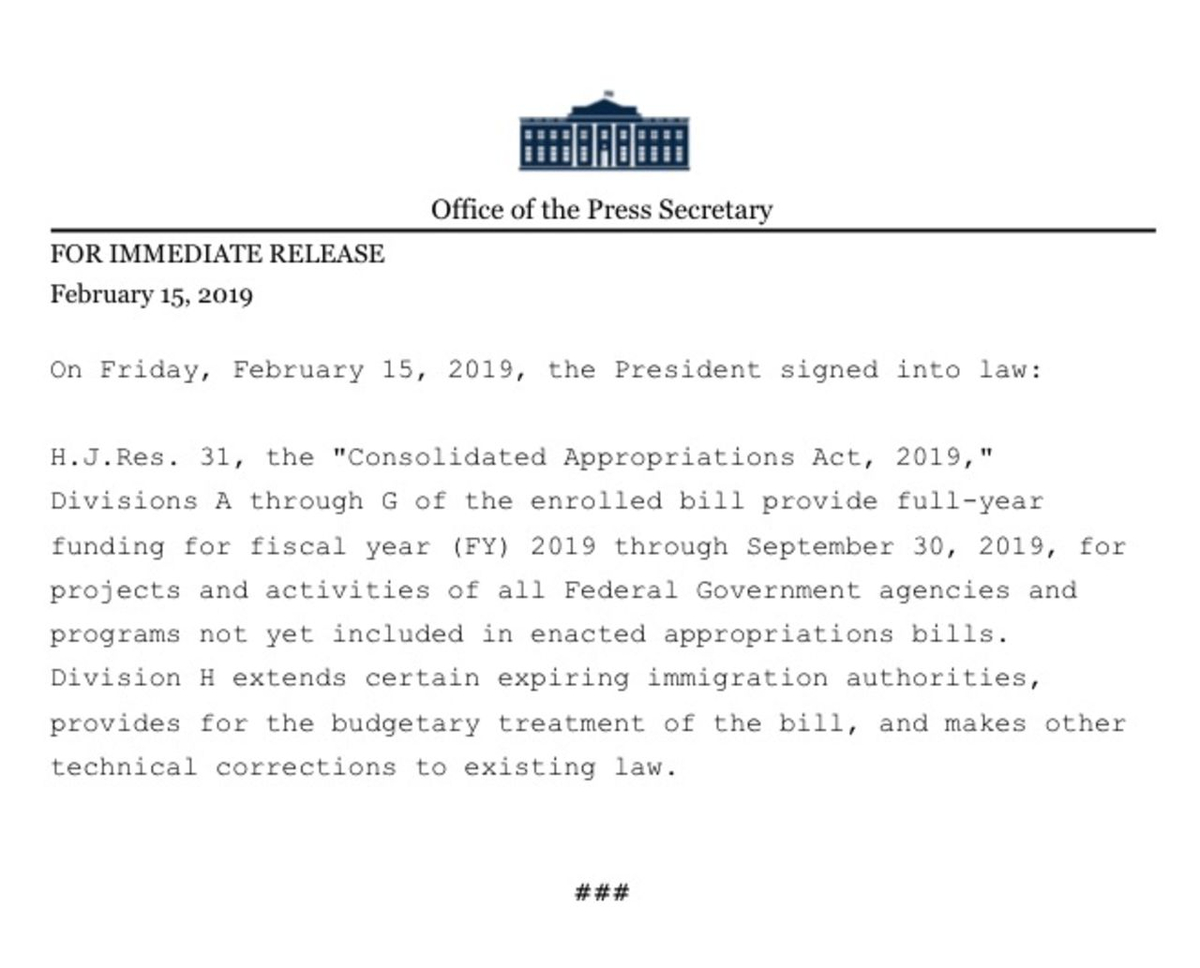
The moment titled 'Statement on signing H.J. Res 31, also known as the Consolidated Appropriations Act of 2019,' was a pivotal point that effectively ended a prolonged government shutdown. The shutdown had persisted for an extensive period, causing widespread uncertainty and disruption for around 800,000 federal employees and numerous government contractors who faced delayed paychecks and economic hardship.
President Donald Trump, faced with mounting pressure to resolve the budget impasse, signed the bill into law. This act provided $1.375 billion for a barrier along the U.S.-Mexican border, significantly less than the $5.7 billion initially requested by the administration. The funding was designated for a 55-mile stretch of new fencing in the Rio Grande Valley, primarily utilizing previously existing fence designs rather than new wall prototypes.
The decision to sign H.J. Res 31 came after intense negotiations between lawmakers and the administration that sought to find a middle ground acceptable to both parties. The agreement marked a compromise that allowed the government to reopen fully, resuming operations that had been suspended.
The impact of this bill extended beyond immediate financial relief for federal workers. It also ignited discussions about border security, immigration policies, and fiscal responsibility. The compromise highlighted the substantial political divisions in Congress and set the stage for future debates on national security and immigration reform.
This legislative action not only put an end to a historic government shutdown but also underscored the complex balance of power between the executive and legislative branches of the U.S. government.
#GovernmentShutdown #Congress #U.S.BorderSecurity #ImmigrationPolicy #FederalFunding #MoofLife
Primary Reference
Donald J. Trump Event Timeline | The American Presidency Project

Explore the Life Moments of
 AI Twin