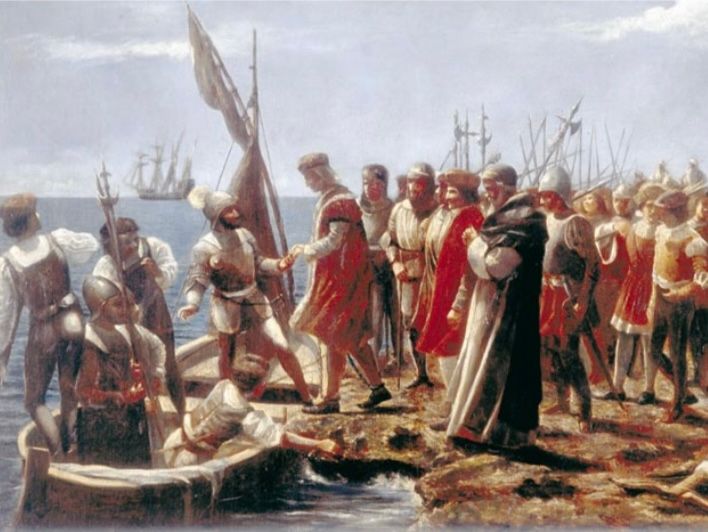
Christopher Columbus's Arrival to Hispaniola
Dominican Republic
Cultural Exchange
4 min read
Updated By: History Editorial Network (HEN)
Published:
Christopher Columbus arrived on the shores of Hispaniola with the aim of establishing a settlement for the Spanish Crown. His landing marked the beginning of European colonization in the Americas. The arrival of Columbus had a profound impact on the indigenous Taíno population of the island.
Upon his arrival, Columbus encountered the Taíno people, who inhabited the island of Hispaniola. He established the first European settlement in the Americas, initiating a period of exploration and conquest that would forever alter the course of history in the region.
Columbus's arrival paved the way for the establishment of Spanish dominance in the Caribbean and the wider American continent. It led to the introduction of European diseases to which the indigenous population had no immunity, resulting in a devastating decline in their numbers.
The arrival of Columbus to Hispaniola brought about significant cultural exchanges between the European colonizers and the indigenous population. The Spaniards introduced new crops, animals, and technologies to the island, while also imposing their language, religion, and political systems on the native inhabitants.
The event marked the beginning of a long and tumultuous period of colonization, exploitation, and resistance in the Americas. The legacy of Columbus's arrival continues to be felt in the Caribbean and the wider Americas, shaping the region's history, culture, and society to this day.
#ChristopherColumbus #Hispaniola #EuropeanColonization #CulturalExchange #IndigenousResistance
Primary Reference
Hispaniola | Genocide Studies Program
Explore the Life Moments of
 AI Twin