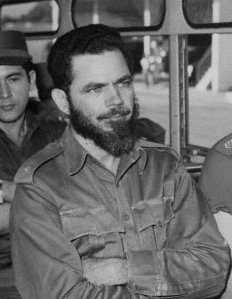
Huber Matos is released from prison after serving out his full term
Cuba
Political
democratic ideals
writer
7 min read
Updated By: History Editorial Network (HEN)
Published:
Huber Matos, a key figure in the Cuban Revolution, was released from prison on October 21, 1979, after serving his full 20-year sentence. Matos' story is one of passionate commitment to democratic ideals and the dramatic transformation from revolutionary hero to political prisoner.
Early Involvement in the Cuban Revolution
Huber Matos was born on November 26, 1918, in Yara, Cuba. Originally a teacher and farmer, he became deeply disillusioned with the corrupt government of Fulgencio Batista. Inspired by Fidel Castro's call to arms, Matos joined the revolutionary movement in 1956. He quickly rose through the ranks due to his leadership and strategic acumen, playing a crucial role in the fight against Batista's forces. Matos' contributions were significant, particularly in the Sierra Maestra mountains, where he helped organize and lead guerrilla operations.
Post-Revolution: Disillusionment and Arrest
After the revolution's triumph in January 1959, Matos was appointed as the military commander of Camagüey province. However, he soon became disillusioned with the increasing influence of communism within the new government. Matos believed that the revolution was straying from its democratic principles and becoming a communist regime under the control of Fidel Castro and his close allies, including Che Guevara and Raúl Castro.
In July 1959, Matos tendered his resignation in a letter to Fidel Castro, expressing his concerns about the direction of the revolution. This act of dissent was seen as a betrayal. On October 21, 1959, Matos was arrested by Fidel Castro himself and subsequently charged with treason and sedition. His trial was a high-profile affair, lasting several days, during which Matos defended his actions and reiterated his commitment to democratic ideals. Despite his defense, he was sentenced to 20 years in prison.
Imprisonment
Matos' imprisonment was harsh and grueling. He was held in various prisons, including La Cabaña and Isla de Pinos (later renamed Isla de la Juventud). Throughout his incarceration, Matos endured solitary confinement, physical and psychological abuse, and deprivation. Despite these conditions, he remained steadfast in his beliefs and became a symbol of resistance against the authoritarian regime.
During his imprisonment, Matos' plight drew international attention. Human rights organizations, foreign governments, and individuals advocated for his release, citing his treatment as a glaring example of the Cuban government's repressive tactics. However, the Cuban regime remained unyielding, and Matos served his full sentence.
Release and Exile
On October 21, 1979, exactly 20 years after his arrest, Huber Matos was released from prison. His release was conditional; he was forced into exile and immediately flown to Costa Rica, where he was warmly received. Matos continued to be a vocal critic of the Castro regime from abroad, advocating for democratic reforms and the liberation of political prisoners in Cuba.
In exile, Matos founded Cuba Independiente y Democrática (CID), an organization dedicated to promoting democracy and human rights in Cuba. He remained an influential figure in the Cuban exile community and continued his activism until his death on February 27, 2014.
Primary Reference
Huber Matos
Explore the Life Moments of
 AI Twin