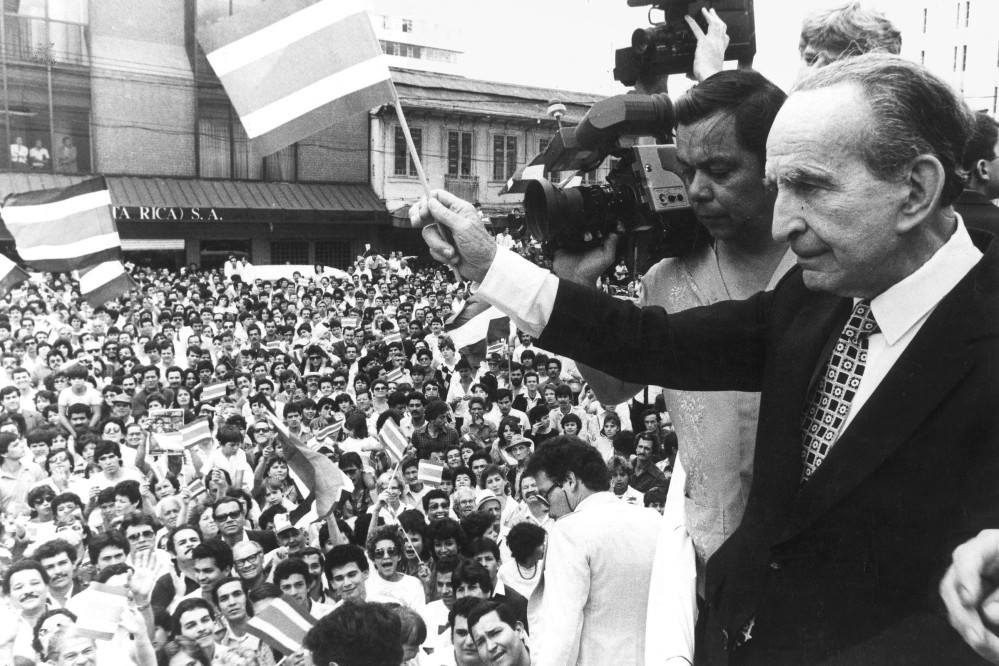
José Figueres Ferrer's 1948 Uprising on Costa Rican Military and Politics
Costa Rica

Politics
Military
3 min read
Updated By: History Editorial Network (HEN)
Published:
Updated:
The Costa Rican Civil War of 1948 was a pivotal moment in the nation's history, marked by a violent uprising led by José Figueres Ferrer. The conflict arose from a disputed presidential election between Rafael Ángel Calderón Guardia and Otilio Ulate Blanco, which ignited tensions across the country. Over the course of 44 days, the civil war resulted in more than 2,000 fatalities, making it the bloodiest event in Costa Rica during the 20th century. The rebels, emerging victorious, established a government junta that took significant steps towards reform.
One of their most notable actions was the abolition of the military, a radical move that set Costa Rica apart from many of its Central American neighbors. The junta also oversaw the drafting of a new constitution, which was created by a democratically elected assembly. After implementing these reforms, the junta transferred power to Otilio Ulate on November 8, 1949, marking a new chapter in Costa Rican democracy. This period not only reshaped the political landscape but also laid the groundwork for a peaceful and stable nation, emphasizing social welfare and democratic governance in the years to come.
#CostaRicanCivilWar #JoséFigueresFerrer #OtilioUlateBlanco #RafaelÁngelCalderónGuardia #CostaRicaHistory #Mooflife #MomentOfLife

Explore the Life Moments of
 AI Twin