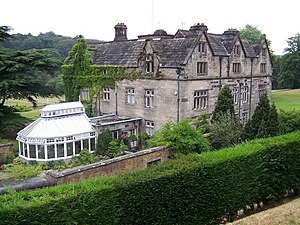
Darwin's Health Breakthrough: Rest at Maer Hall Influences Scientific Work and Balance.
United Kingdom
Science
HealthAndScience
3 min read
Updated By: History Editorial Network (HEN)
Published:
Updated:
Charles Darwin experienced a heart palpitation that led his doctors to recommend rest for his condition. To recover, he chose to visit Maer Hall, a place associated with his family. During this period, Darwin was in the midst of rigorous scientific studies and observations which placed considerable stress on his health.
Maer Hall, located in Staffordshire, provided a tranquil environment crucial for his recovery. It was the home of his uncle, Josiah Wedgwood II, and a familiar haven for Darwin. The visit provided a necessary respite, allowing him to recuperate from the physical stress that his demanding work had inflicted.
This incident highlighted the strains that intense study and scientific inquiry could have on an individual's health. It underscores the importance of balance between work and rest, a principle that holds true in the realm of scientific endeavors and beyond. This event also indirectly influenced Darwin's future work habits and his awareness of managing health in conjunction with his professional pursuits.
The visit to Maer Hall became a pivotal point, encouraging Darwin to take necessary breaks, which likely contributed positively to his future productivity and groundbreaking contributions to science. This episode serves as a historical example of how health considerations can impact significant scientific progress.
#Darwin #HealthAndScience #MaerHall #HeartHealth #LifeBalance #ScienceHistory #MoofLife
Explore the Life Moments of
 AI Twin